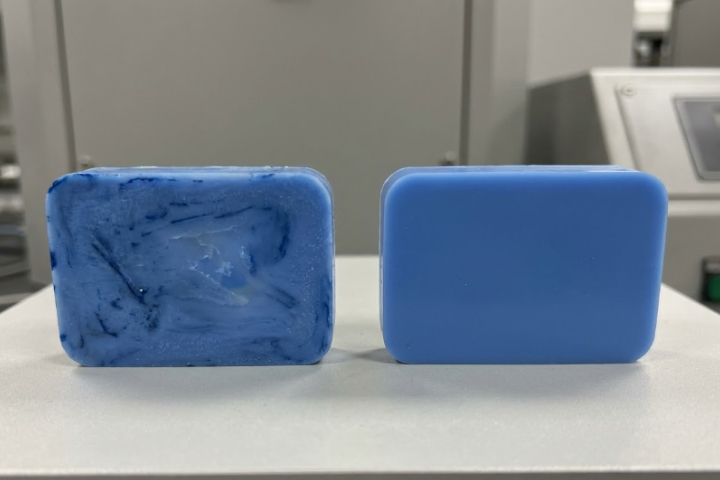
How to Color Silicone Rubber: Choosing the Right Method for Uncured and Cured Silicone
Want to change the color of silicone rubber? The first thing to know is that silicone is not colored quite like fabric or other absorbent materials.
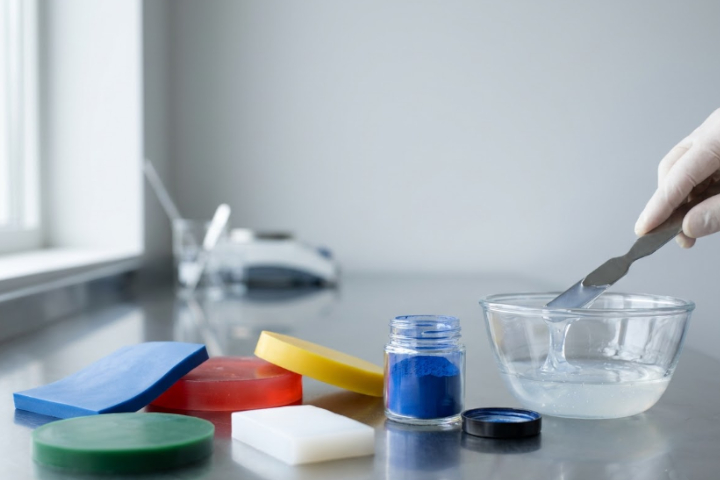
In most cases, the best approach is to use a silicone-compatible pigment or colorant and incorporate it into the silicone before it cures. If the silicone is already cured, the process is different: you’re generally looking at a surface coating rather than coloring the material all the way through.
That distinction matters because choosing the wrong colorant or method can lead to uneven color, poor curing, weak adhesion, or a finished product that doesn’t perform as expected.
This guide explains how to choose the right coloring method, how to color uncured silicone, what to do with cured silicone, and which common mistakes to avoid.
Quick answer: If you’re working with uncured silicone, use a colorant specifically designed and tested for compatibility with your silicone system. Mix it thoroughly, make a small test sample, and evaluate the color after curing. For already-cured silicone, use a compatible surface coating and test its adhesion and durability before applying it to the final part.
Can You Dye Silicone Rubber?
Yes, silicone rubber can be colored, but “dyeing” isn’t always the technically accurate way to describe the process.
Silicone products are commonly colored using pigments or concentrated colorants designed to work with silicone. Commercial silicone colorants are available for systems including liquid silicone rubber (LSR), high-consistency rubber (HCR), and room-temperature-vulcanizing (RTV) silicones.
This is different from dyeing a fabric, where a dye can penetrate and bond with fibers.
For silicone, the coloring material is generally dispersed throughout the uncured silicone before the material cures. Once the silicone has cured, changing its color becomes a surface-treatment problem rather than an internal coloring process.
Before choosing a coloring method, it helps to understand the different types and properties of silicone rubber. Learn more about silicone rubber, its types, properties, and manufacturing process in our complete guide to silicone rubber.
Is my silicone still uncured, or has it already cured?
That answer determines the most appropriate approach.
First: Identify the Silicone You’re Working With
Not all silicone products are formulated or processed in exactly the same way.
You may encounter:
Liquid silicone rubber (LSR)
High-consistency or high-temperature-vulcanizing silicone (HCR/HTV)
Two-part RTV silicone
One-part RTV silicone
Other specialty silicone formulations
The appropriate colorant depends on the silicone formulation and its curing system. Commercial suppliers specifically formulate colorants for different silicone systems, so compatibility should be confirmed before use.
Uncured silicone
If the silicone has not cured yet, you can generally incorporate a compatible pigment or colorant into the material before curing.
This is usually the preferred approach when you want the color to be part of the silicone itself.
Already-cured silicone
If the silicone is already solid and cured, you cannot simply mix pigment into it.
Instead, you would need to investigate a compatible coating or other surface-coloring method. The success of that approach depends heavily on adhesion, flexibility, surface preparation, and the conditions the finished product will experience.
Dye vs. Pigment: What’s the Difference?
The terms “dye” and “pigment” are sometimes used loosely, but they aren’t interchangeable.
A dye is generally soluble in the medium in which it is used. A pigment is an insoluble colorant that is dispersed through a material.
For silicone rubber, silicone-compatible pigments and pigment dispersions are commonly used. For example, commercial suppliers offer concentrated pigments specifically designed for silicone RTV systems, as well as colorant dispersions for LSR and HCR applications.
This is why you shouldn’t assume that a conventional fabric dye, food dye, or general-purpose colorant will work simply because it produces the color you want.
The important question isn’t just:
“Will this make silicone look blue?”
It’s:
“Is this colorant compatible with my silicone system and its curing process?”
How to Color Uncured Silicone Rubber
If you’re starting with uncured silicone, the basic process is straightforward, but the details matter.
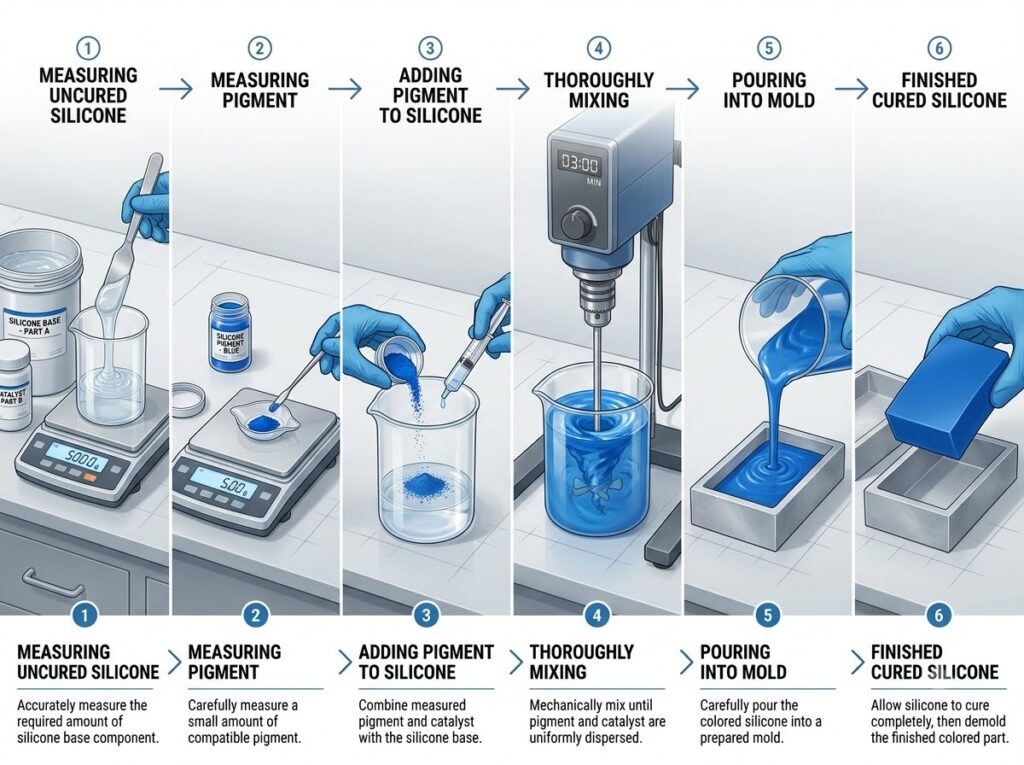
1. Choose a silicone-compatible colorant
Start with a pigment or colorant specifically recommended for your type of silicone.
Check the supplier’s technical information for:
Silicone compatibility
Recommended dosage or loading range
Cure-system compatibility
Heat resistance
Light stability
Intended application
Any application-specific certifications
For example, commercial colorants are available specifically for LSR and HCR silicone applications, while other pigments are formulated for tin-cure and platinum-cure RTV systems.
Don’t assume that a colorant designed for another type of plastic or rubber will behave the same way in silicone.
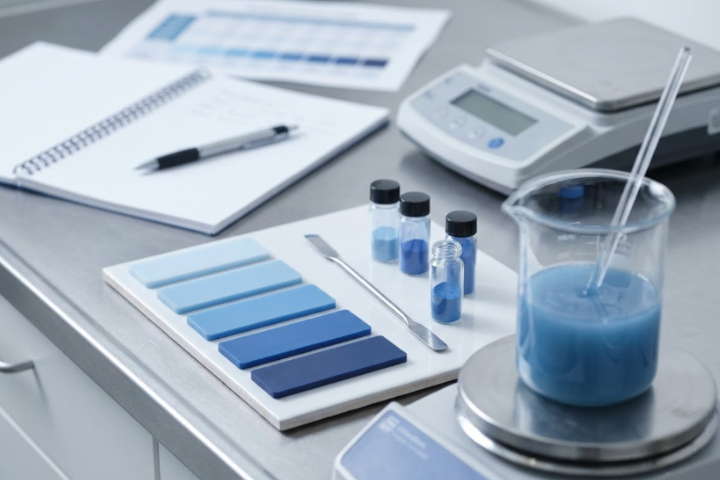
2. Start with a small test batch
This is one of the most important steps.
Before coloring a large quantity of silicone, make a small test batch.
Why?
Because the color you see in uncured silicone isn’t necessarily the exact appearance you’ll get after curing. Transparency, pigment concentration, silicone formulation, thickness, surface finish, and curing conditions can all influence the final appearance.
A small test can help you check:
Final color
Color uniformity
Cure behavior
Surface appearance
Flexibility
Adhesion, where relevant
Whether the colorant causes any unwanted changes
A few minutes of testing can save you from having to discard an entire batch.
3. Measure the colorant carefully
Avoid adding pigment by eye if you need repeatable results.
The appropriate amount depends on the specific colorant and silicone system. Different manufacturers give different recommended loading ranges, so there is no single percentage that applies to every silicone product.
For example, some concentrated silicone pigments are recommended at very low addition levels, while other colorant systems use different concentrations or masterbatch formulations.
Follow the technical instructions for the specific colorant you’re using.
For production work, record the amount used so you can reproduce the same color later.
4. Mix the colorant thoroughly
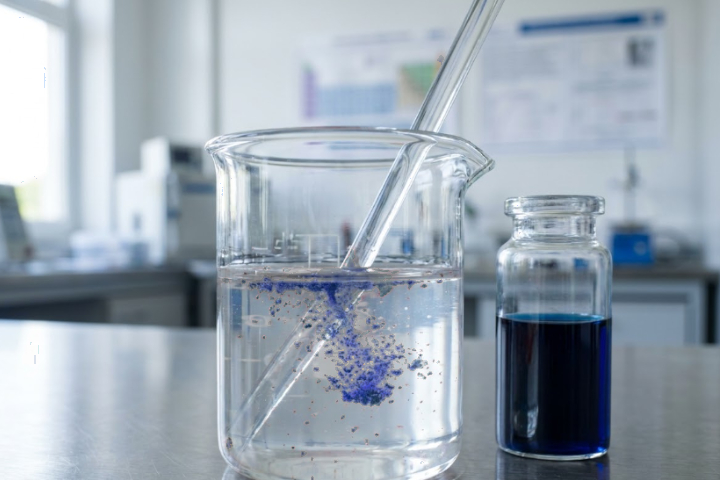
The goal is to distribute the pigment evenly throughout the silicone.
Poor dispersion can result in:
Streaks
Spots
Marbling
Uneven color
Batch-to-batch variation
For liquid silicone systems, commercially available colorant dispersions are designed to help achieve consistent dispersion. In HCR applications, silicone color masterbatches can be incorporated during controlled rubber mixing.
The exact mixing procedure depends on the silicone system and equipment, so follow the silicone and colorant manufacturer’s instructions rather than assuming that one mixing process works for every material.
5. Cure a test sample
Don’t judge the final color only while the silicone is uncured.
Cure the test sample under the same conditions you intend to use for the final product.
Then inspect:
Color
Uniformity
Surface finish
Hardness or flexibility
Cure quality
Any signs of pigment separation or other defects
For professional color matching, manufacturers may develop a specific pigment formula, cure a sample, and then compare the finished silicone against an approved color standard.
6. Adjust the color if necessary
If the cured sample isn’t right, adjust the formulation and test again.
Don’t automatically solve a weak color by adding a large amount of pigment. Excessive colorant can affect the material or curing behavior, depending on the system.
Some silicone pigment manufacturers explicitly warn that exceeding their recommended loading can affect physical properties or curing.
The better approach is:
Test → cure → evaluate → adjust → test again.
What If the Silicone Is Already Cured?
This is where many coloring guides become misleading.
If you already have a cured silicone component, you can’t simply add pigment to the inside of the material.
Instead, you’re generally looking at surface coloring.
A coating may be appropriate for some applications, but silicone is known for being difficult to bond to, so don’t assume that ordinary paint will permanently adhere to it.
Start with surface preparation
The surface needs to be clean and suitable for the coating you’re considering.
Follow the coating manufacturer’s preparation instructions rather than relying on a generic cleaning method.
Test adhesion
Before coating the finished product, test a small, representative area.
Consider what the silicone will experience after coloring.
Will it:
Stretch?
Bend?
Rub against another surface?
Be washed?
Be exposed to heat?
Be exposed to sunlight?
Come into contact with chemicals?
A coating that looks excellent immediately after application may not remain intact when the silicone repeatedly flexes or stretches.
Choose a coating designed for the application
If you’re coloring cured silicone, look for a coating system whose manufacturer specifically indicates compatibility with silicone or your intended application.
The objective isn’t simply to find something that sticks temporarily. You want a system that remains attached under the conditions the finished product will experience.
How to Get an Even, Consistent Silicone Color
Getting a silicone part to look “blue” is easy compared with getting every batch to look like the same blue.
For one-off projects, small differences may not matter. For manufacturing, color consistency can become a major quality-control issue.
Measure instead of guessing
Record the amount of colorant used relative to the amount of silicone.
Keep your process consistent
Changes in mixing, curing, material thickness, or processing conditions can influence the final appearance.
Judge the cured material
The final product—not the uncured mixture—should be your reference point.
Keep a color sample
For repeat production, keep an approved sample or documented color standard.
Professional silicone manufacturers may maintain precise pigment formulas and compare cured samples against a defined color target.
Remember that thickness matters
Translucent silicone can look different depending on how thick the finished section is. A thin section may appear lighter or more transparent than a thick section containing the same pigment formulation.
This is particularly important when you’re trying to match a specific color across differently shaped silicone components.
Common Mistakes When Coloring Silicone
Using ordinary fabric dye
A conventional fabric dye isn’t automatically suitable for silicone.
Look for a colorant specifically designed for the silicone system you’re using.
Adding too much pigment
More pigment doesn’t necessarily mean a better color.
Overloading can affect the material or its curing behavior, depending on the formulation. Always stay within the colorant manufacturer’s recommended range.
Skipping the test batch
This is probably the easiest mistake to prevent.
A small test tells you far more than a theoretical calculation.
Judging the color before curing
The cured product is what matters.
If possible, evaluate your sample after it has gone through the same curing process as the final product.
Assuming all silicone behaves the same
A pigment that works well with one silicone system isn’t automatically appropriate for another.
Pay attention to:
Silicone type
Cure chemistry
Processing temperature
Colorant formulation
Intended application
Assuming surface paint will remain flexible
Cured silicone can flex and stretch significantly. A coating that doesn’t accommodate that movement may crack, peel, or wear away.
For flexible products, test the coated material under realistic conditions.
Can Coloring Affect Silicone’s Performance?
It can, which is another reason not to treat color as purely cosmetic.
The effect depends on the silicone formulation, pigment, concentration, and processing conditions.
Potential areas to evaluate include:
Cure behavior
Hardness
Flexibility
Strength
Surface characteristics
Heat resistance
Color stability
Long-term durability
Commercial silicone colorants are specifically formulated to address issues such as dispersion, heat stability, and compatibility with particular silicone systems.
For a simple craft project, a small test may be enough to establish whether your chosen system works.
For an engineered or production part, however, color should be treated as part of the material formulation—not as an afterthought.
When Should You Use Pre-Colored Silicone Instead?
Coloring silicone yourself isn’t always the best solution.
If you’re producing a large number of parts, need a tightly controlled color, or have demanding performance requirements, a controlled manufacturing process may be more appropriate.
Industrial silicone manufacturers commonly use color masterbatches, pigment dispersions, or pre-formulated color systems to improve repeatability.
This becomes particularly important when the silicone is used in applications where appearance and material performance both matter.
For example, if you’re producing hundreds or thousands of identical components, manually experimenting with pigment may create unnecessary variation. A controlled color formulation can make it easier to reproduce the same result from batch to batch.
A Simple Decision Guide
Use this as a starting point:
Your situation
Best approach to investigate
Silicone is still uncured
Use a compatible silicone pigment/colorant
You need the color throughout the material
Incorporate color before curing
Silicone is already cured
Investigate a compatible surface coating
You need repeatable production colors
Use a controlled pigment/masterbatch system
You’re unsure whether a colorant is compatible
Test a small sample first
The application is medical, food-contact, or otherwise regulated
Verify the specific material and colorant documentation
The exact choice should always be based on the silicone formulation, colorant documentation, and intended application.
Frequently Asked Questions
Can you dye silicone rubber with regular fabric dye?
You shouldn’t assume that regular fabric dye will work effectively with silicone. Silicone is commonly colored using pigments or colorants specifically formulated for silicone systems.
Can you color cured silicone?
You cannot simply mix pigment into already-cured silicone. For an existing cured part, you would need to investigate a suitable surface-coloring or coating system and test its adhesion and durability.
What type of pigment works with silicone?
Use a pigment or colorant specifically designed for your silicone system. Products are available for different silicone technologies, including RTV, LSR, and HCR systems.
How much pigment should you add?
There is no universal amount that works for every silicone and pigment. Follow the colorant manufacturer’s recommended loading range and test the finished material before scaling up.
Why did my silicone color turn out uneven?
Uneven color can result from inadequate pigment dispersion, inconsistent mixing, unsuitable colorant compatibility, or variations in processing. Start by checking the colorant and silicone manufacturer’s mixing recommendations.
Why does my color look different after curing?
The appearance of silicone can change as it cures, and factors such as transparency, thickness, pigment concentration, surface finish, and curing conditions can influence the final color. Always evaluate a cured sample before committing to a larger batch.
Can I use any paint on cured silicone?
Not necessarily. Silicone can be difficult to coat reliably, particularly when the finished part flexes or stretches. Use a coating system that is appropriate for silicone and test adhesion and durability before applying it to the final product.
Final Takeaway
The easiest way to get the right silicone color is to choose the coloring method based on the material’s condition—not simply on the color you want.
If you’re working with uncured silicone, start with a compatible pigment or colorant, follow the manufacturer’s recommended loading, mix it thoroughly, and test a small sample before making the final batch.
If the silicone is already cured, treat the job as a surface-coating challenge and test adhesion and durability carefully.
Most importantly, don’t skip the test stage. The right colorant and process can give you a consistent result, while the wrong combination can affect both appearance and silicone performance.
Identify the silicone → choose a compatible colorant → test → cure → inspect → adjust.
That simple process can save a lot of wasted material and help you achieve a much more reliable result.