
Every manufacturer has encountered a situation where conventional rubber simply fails: a gasket that cracks under engine heat, a food-processing seal that leaches flavour, a medical tube that cannot survive repeated sterilisation. These are precisely the conditions where silicone rubber earns its reputation as a premium material.
Silicone rubber is a synthetic elastomer whose polymer backbone is built from alternating silicon and oxygen atoms rather than carbon-to-carbon bonds found in natural rubber and most other synthetic elastomers. This structural difference is the root cause of almost every property advantage it carries: exceptional heat resistance, chemical inertness, biocompatibility, and the ability to remain flexible at both very high and very low temperatures.

The first commercial silicone rubber was introduced by Dow Corning in 1943. Since then, silicone rubber has expanded into virtually every industry — from automotive and aerospace to medical devices, food processing, and consumer electronics. Today, it is manufactured and distributed globally by major producers including Wacker Chemie, Shin-Etsu Chemical, Momentive, and Elkem.
This guide covers everything manufacturers need to know: the chemistry and structure of silicone rubber, the main types and how they differ, key properties, how it is made and processed, how it compares to other rubber materials, and how to source the right grade in India.
What is Silicone Rubber? Chemistry and Structure
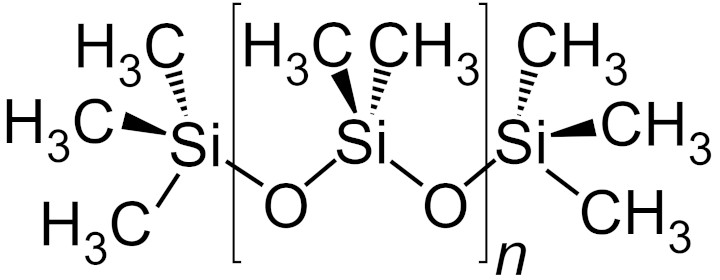
Silicone rubber belongs to a family of polymers called polysiloxanes or polydimethylsiloxanes (PDMS). According to the Wikipedia article on Silicone (Polydimethylsiloxane), all polymerised siloxanes consist of an inorganic silicon–oxygen backbone chain (···–Si–O–Si–O–Si–O–···) with two organic groups attached to each silicon centre. In the most common form, polydimethylsiloxane (PDMS), both side groups are methyl groups (CH₃).
Silicon vs Silicone vs Silicone rubber — clearing up the confusion
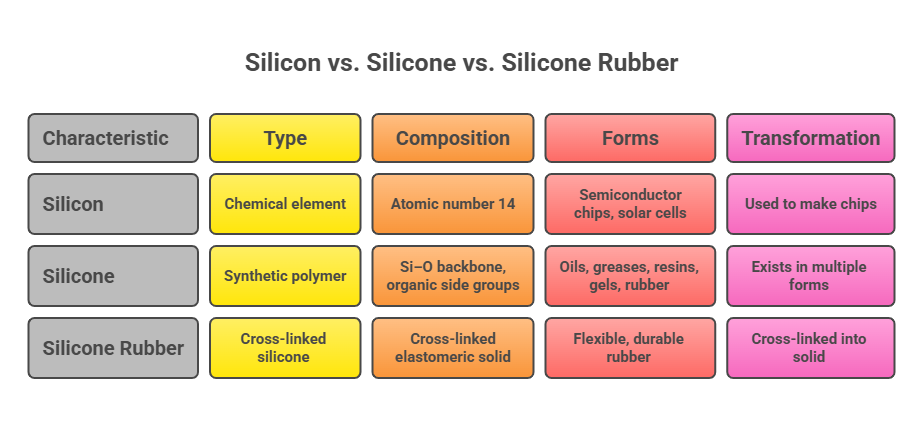
These three terms are often confused by procurement teams and engineers:
- Silicon is a chemical element (atomic number 14) and a hard, grey metalloid used to make semiconductor chips and solar cells.
- Silicone is a synthetic polymer with an inorganic Si–O backbone and organic side groups. It exists in multiple forms: oils, greases, resins, gels, and rubber.
- Silicone rubber is silicone that has been cross-linked (vulcanised) into an elastomeric solid. Cross-linking transforms the fluid polymer into a flexible, durable rubber.
Why the Si–O backbone matters
The Si–O bond has a dissociation energy of approximately 460 kJ/mol, which is significantly higher than the C–C bond in organic rubbers. This is the primary reason why silicone rubber resists thermal degradation, UV radiation, ozone attack, and oxidation at temperatures that would destroy natural rubber or EPDM. This value is cited in the peer-reviewed paper by Li et al., “Functional PDMS Elastomers: Bulk Composites, Surface Engineering, and Precision Fabrication” (Advanced Science, 2023, PMC ID: PMC10700310).
The Si–O–Si bond angle is also larger than the C–O–C angle in organic polymers, and the barrier to rotation around the Si–O bond is extremely low (approximately 3.3 kJ/mol, compared to 13.8 kJ/mol for a C–C bond in polyethylene). This gives the silicone backbone exceptional chain flexibility, which is why silicone rubber remains pliable and elastic even at temperatures well below freezing, while organic rubbers become stiff and brittle.
From PDMS to rubber: the role of fillers and cross-linking
In its pure, unfilled state, PDMS has very low mechanical strength. The addition of fumed silica as a reinforcing filler is what gives commercial silicone rubber its usable properties. According to IOTA Corporation’s technical documentation (iotachem.com, 2025), fumed silica with a specific surface area of 200–380 m²/g can increase the tensile strength of silicone rubber by approximately 10 times. This is also confirmed by the peer-reviewed article published in the journal Macromolecules (ACS, 2023), “Understanding the Reinforcement Effect of Fumed Silica on Silicone Rubber”.
Cross-linking — the process of forming covalent bonds between adjacent polymer chains — converts the linear PDMS chains into a three-dimensional network that prevents permanent deformation under load. Different curing systems (peroxide, platinum, condensation) achieve this in different ways, and the choice of curing system directly determines which type of silicone rubber results.
Types of Silicone Rubber: HTV, LSR, and RTV
Silicone rubber is broadly classified into three types based on their curing mechanism and processing conditions. The classification system is well documented by Wacker Chemie AG in their technical guide “Solid and Liquid Silicone Rubber” (Wacker, document 6709-EN) and by Elkem’s High Consistency Rubber technical overview (elkem.com).

1. HTV (High Temperature Vulcanised) / HCR (High Consistency Rubber)
HTV, also called HCR (High Consistency Rubber), is a solid silicone rubber compound made from very high molecular weight PDMS polymer chains. According to Yaksil (yaksil.com, “HTV, LSR, and RTV Silicone Rubber: Key Differences,” December 2025), the molecular weight of HTV typically ranges between 400,000 and 800,000 g/mol.
This high molecular weight is what gives HTV its solid, dough-like consistency at room temperature — it is typically supplied as blocks, sheets, or strips wrapped in PE foil. It requires heat and pressure to cure, and is processed by compression moulding, transfer moulding, extrusion, or calendering.
Key parameters for compression moulding of HTV (sourced from Yaksil and confirmed by Wacker ELASTOSIL® product datasheets):
- Curing temperature: 160–180°C
- Curing pressure: 10–20 MPa
- Curing time: 3–10 minutes
- Post-cure oven: approximately 200°C for 4 hours, to remove residual low-molecular-weight compounds and stabilise the material
There are two curing mechanisms for HTV. Peroxide curing uses organic peroxides to generate free radicals that cross-link the polymer chains; it is lower cost but produces small-molecule by-products that must be removed by post-curing, limiting its use in food and medical applications. Addition (platinum) curing uses a platinum catalyst to achieve cross-linking via hydrosilylation with no volatile by-products, making it preferred for food-contact and medical-grade parts. Wacker’s ELASTOSIL® R plus series uses a platinum-addition cure for this reason.
HTV is the material of choice when high mechanical strength, long-term thermal stability, or continuous service in demanding environments is required: automotive seals and hoses, industrial gaskets, O-rings, electrical cable insulation, and aerospace components.
2. LSR (Liquid Silicone Rubber)
LSR is technically a subtype of addition-cure silicone, but it is treated as a distinct category in practice due to its fundamentally different form and processing method. According to Yaksil’s technical comparison, the molecular weight of LSR is much lower than HTV, typically between 10,000 and 80,000 g/mol, which is why it maintains a liquid state at room temperature with a viscosity of 1,000–100,000 mPa·s at 25°C.
LSR is supplied as a two-component system (Part A and Part B) that is metered, mixed, and injected into a heated mould where it cures rapidly. Curing occurs via a platinum-catalysed hydrosilylation reaction at 120–200°C in just 20–60 seconds. This rapid, automated process makes LSR ideal for high-volume precision manufacturing.
Key advantages of LSR over HTV:
- No volatile by-products during curing (platinum catalysis, not peroxide).
- Tight dimensional tolerances (±0.02 mm achievable).
- Suitable for complex geometries, thin walls, and multi-cavity moulds.
- Can be overmoulded onto rigid substrates in a single operation.
- Preferred for medical-grade applications because it produces clean, extractable-free parts.
LSR meets the medical device industry’s requirements for USP Class VI and ISO 10993 biocompatibility — the same standards required by the medical device market in India, which is projected to reach USD 50 billion over the next seven years, according to Invest India data cited by Mordor Intelligence.
3. RTV (Room Temperature Vulcanised)
RTV silicone cures at room temperature (20–40°C) and comes in two forms. RTV-1 is a single-component system that cures by absorbing atmospheric moisture from the outside in; this is the familiar silicone sealant used in construction, plumbing, and electronics potting. RTV-2 is a two-component system where Part A and Part B are mixed in a set ratio and cure rapidly at room temperature or with gentle warming.
Key characteristics:
- RTV-1: cures from the outside in; depth of cure is limited by moisture diffusion rate; used for joint sealing, gap filling, and encapsulation.
- RTV-2 (condensation type): releases small by-products (alcohols or acetic acid) on curing; flexible and high tear strength; used for prototype moulds and casting.
- RTV-2 (addition/platinum type): no by-products; low shrinkage; dimensionally stable; used for precision mould making and electronic potting.
RTV is not recommended for high mechanical stress or high-volume mass production applications. According to SILITECH AG’s 2026 Silicone Rubber Guide (silitech.ch), “the choice of processing method determines the appropriate type of silicone, not the other way around.”
Comparison table: HTV vs LSR vs RTV
| Property | HTV / HCR | LSR | RTV |
| Molecular weight (g/mol) | 400,000–800,000 | 10,000–80,000 | Variable (lower MW) |
| Form at room temperature | Solid block/sheet | Liquid (two-part) | Liquid/paste (1- or 2-part) |
| Curing temperature | 160–180°C | 120–200°C | Room temp (20–40°C) |
| Curing mechanism | Peroxide or platinum | Platinum (addition) | Condensation or addition |
| Processing method | Compression, transfer, extrusion, calendering | Liquid injection moulding (LIM) | Casting, pouring, gun dispensing |
| Cycle time | 3–10 minutes | 20–60 seconds | Hours (RTV-1) to minutes (RTV-2) |
| Best for | Gaskets, tubing, seals, automotive, industrial | Medical, food, electronics, high-volume precision parts | Sealants, prototypes, potting, mould making |
| Food/medical suitability | Yes (platinum-cure grades; FDA 21 CFR 177.2600) | Yes (USP Class VI, ISO 10993, FDA) | Limited (case by case; check TDS) |
Source: Yaksil — “HTV, LSR, and RTV Silicone Rubber: Key Differences” (yaksil.com, December 2025); Wacker Chemie ELASTOSIL® product documentation; SILITECH AG Silicone Rubber Guide 2026.
Key Properties of Silicone Rubber
The following properties are all verified against primary technical and scientific sources. Each property is stated with its source.
Temperature resistance
Silicone rubber is generally non-reactive, stable, and resistant to extreme temperatures from −55°C to 300°C while maintaining its useful properties (Wikipedia, “Silicone rubber,” April 2026). In continuous service, most standard grades perform up to 200–230°C, while high-temperature specialty grades can withstand up to 300°C for short-term exposures. Wacker’s ELASTOSIL® R 756/40 OH datasheet confirms that vulcanisates of this grade in combination with heat stabilisers can withstand 300°C for at least seven days.
This compares dramatically with most organic rubbers: EPDM is typically rated to a maximum of approximately 130°C, and neoprene to approximately 125°C (Silicone Engineering, “EPDM vs Silicone Rubber,” silicone.co.uk, 2018).
Electrical insulation
Silicone rubber is an electrical insulator with a low electrical conductivity of approximately 10⁻¹⁴ S/m and a high breakdown voltage of 2 × 10⁷ V/m, as reported by Li et al. (Advanced Science, 2023). The standard abbreviation VMQ (where Q denotes the silicone-oxygen polymer backbone and M the methyl groups) reflects this property: it is one of the primary reasons silicone rubber is specified for cable insulation, high-voltage connectors, transformer seals, and electrical enclosures.
Biocompatibility and food safety
Silicone rubber formulated to food-contact and medical standards is chemically inert, non-toxic, tasteless, and odourless. Food-grade silicone rubber must comply with FDA 21 CFR 177.2600, which governs rubber articles in repeated contact with food, as confirmed by the FDA regulation itself and by ElastaPro (elastapro.com). For medical applications, silicone must meet USP Class VI and/or ISO 10993 biocompatibility standards. These standards test for cytotoxicity, systemic toxicity, and sensitisation.
Platinum-cured (addition-cure) silicone is strongly preferred for both food and medical uses because the curing reaction produces no volatile by-products, resulting in low extractables. Peroxide-cured grades require post-curing to drive off peroxide decomposition products before they can meet these standards.
Chemical and environmental resistance
The Si–O backbone is inert to most acids, alkalis, ozone, UV radiation, and water. Unlike organic rubbers, which have a carbon-to-carbon backbone susceptible to UV radiation, ozone, and oxidative degradation over time, silicone rubber maintains its properties during prolonged outdoor exposure (Wikipedia, “Silicone rubber”). This makes it preferred for weatherstripping, outdoor electrical applications, and building façade gaskets.
Important limitation: standard silicone rubber has poor resistance to hydrocarbon fuels and high-pressure petroleum-based oils. For these applications, fluorosilicone (FVMQ) or nitrile rubber (NBR) is the appropriate choice.
Mechanical properties and limitations
A key trade-off manufacturers must understand: silicone rubber has relatively low tensile strength compared to other elastomers. According to the rubber compound comparison published by Elastoproxy (elastoproxy.com), EPDM and neoprene both have approximately twice the tensile strength of standard silicone rubber. Natural rubber has the highest tensile strength of all common elastomers.
The peer-reviewed study published in Advanced Science (PMC10700310) reports that commercial PDMS (Sylgard 184) has a tensile strength of 3.5–7.7 MPa and elongation at break up to 210%. Fumed silica reinforcement raises these values substantially, but silicone rubber remains in a lower range than EPDM or neoprene for pure mechanical applications.
Silicone also has the lowest abrasion resistance among common elastomers (Elastoproxy.com), making it unsuitable for dynamic seals subject to friction or rubbing.
Properties summary table
| Property | Silicone Rubber (VMQ) | Typical Value / Comment | Source |
| Temperature range | −55°C to +300°C | Standard grades to +230°C continuous; specialty grades to +300°C short-term | Wikipedia; Wacker ELASTOSIL datasheet |
| Tensile strength | 3.5–7.7 MPa (unfilled/lightly filled) | Fumed silica raises this significantly; still lower than EPDM/neoprene | Li et al., Advanced Science 2023 (PMC10700310) |
| Elongation at break | Up to 210% (PDMS base) | Varies by compound and filler level | Li et al., Advanced Science 2023 |
| Electrical conductivity | ≈10⁻¹⁴ S/m | Excellent insulator; breakdown voltage 2×10⁷ V/m | Li et al., Advanced Science 2023 |
| UV / ozone resistance | Excellent | Stable Si–O backbone resists photo-oxidative attack | Wikipedia; Silicone Engineering |
| Oil / fuel resistance | Poor | Swells in hydrocarbon fuels; use fluorosilicone (FVMQ) instead | Xometry; Essentra Components |
| Abrasion resistance | Lowest of common elastomers | Not suitable for high-friction dynamic applications | Elastoproxy.com |
| Food/medical grade | Available | FDA 21 CFR 177.2600; USP Class VI; ISO 10993 | ElastaPro; Elastostar |
How Silicone Rubber is Made: The Manufacturing Process
The manufacturing process for silicone rubber parts involves several well-defined stages, documented comprehensively in Wacker Chemie’s technical guide “Solid and Liquid Silicone Rubber” and in the process overview published by Yaksil and Ruiyang Silicone (rysilicone.com).

Step 1: Raw material synthesis
Silicone rubber production starts with quartz (SiO₂), which is reduced to silicon metal and then converted to chlorosilanes via the Müller-Rochow process. Dimethyldichlorosilane is hydrolysed to form PDMS oligomers and polymers, with chain length (and therefore molecular weight) controlled by reaction conditions and end-blockers. This synthesis chemistry is described in the INMR.com article “Chemistry & Properties of Silicones” (inmr.com, 2026).
Step 2: Compounding
The base PDMS polymer is mixed with reinforcing fillers (primarily fumed silica, which can improve tensile strength by up to 10 times as documented by IOTA Corporation), curing agents, heat stabilisers, pigments, and any functional additives required for the application. For HTV, this mixing is done on two-roll mills or in internal mixers (Banbury mixers). For LSR, the two components (Part A, containing the polymer and silica, and Part B, containing the platinum catalyst) are produced as separate, pumpable liquids.
Step 3: Shaping
The choice of shaping method depends on the type of silicone and the required output:
- Compression moulding: the silicone compound is placed in an open mould, which is then closed and heated and pressurised. Used for HTV; simplest and lowest tooling cost; preferred for small runs and large parts. Cure conditions: approximately 160–180°C, 10–20 MPa, 3–10 minutes (Yaksil, 2025).
- Transfer moulding: compound is transferred from a chamber through a gate into a closed mould under high pressure. Preferred over compression moulding when metal inserts must be encapsulated, as the injection process fills around the inserts without creating voids.
- Liquid injection moulding (LIM): used for LSR; the two liquid components are metered, mixed in a static mixer, and injected into a heated closed mould at 120–200°C. Cycle time is 20–60 seconds. Fully automated; produces precision parts with no flash and no secondary finishing required. Preferred for medical, food, and consumer electronics at high volume (Wacker ELASTOSIL® LR product documentation).
- Extrusion: HTV compound is pushed through a die to produce continuous profiles (tubes, cords, strips, hoses). The extrudate is cured in a hot-air oven or salt bath. Produces arbitrary lengths with consistent cross-section.
- Calendering: HTV is rolled between heated cylinders to produce flat sheets or fabric-bonded composites. Used for silicone-coated textiles and release liners.
Step 4: Post-curing
After moulding, most HTV and LSR parts are placed in a post-cure oven at approximately 200°C for 4 hours. This step, documented in Yaksil’s HTV processing guide and in Wacker ELASTOSIL® technical datasheets, removes residual low-molecular-weight PDMS oligomers and, in peroxide-cured grades, drives off peroxide decomposition by-products. Post-curing is mandatory for food-contact and medical-grade parts and significantly improves long-term thermal stability.
Step 5: Quality control
Quality checks include Shore A hardness measurement (per ISO 868), tensile strength and elongation at break (per ISO 37), compression set (per ISO 815), and visual/dimensional inspection. For food and medical-grade applications, extractables testing (per 21 CFR 177.2600 and USP Class VI protocols) is required before release.
Silicone Rubber vs Other Elastomers: When to Choose What
Manufacturers frequently evaluate silicone rubber against EPDM, neoprene (CR), natural rubber (NR), and nitrile rubber (NBR) for sealing and gasketing applications. The comparison below is based on data from Elastoproxy.com (“Comparing Rubber Compounds: Material Properties”), Silicone Engineering UK (“EPDM vs Silicone Rubber”), Essentra Components (“EPDM vs Silicone: A Simple Guide”), and Xometry (“Silicone vs EPDM: Material Differences”).
| Property | Silicone (VMQ) | EPDM | Neoprene (CR) | Nitrile (NBR) | Natural Rubber |
| Temperature range | −55°C to +230°C continuous (+300°C short-term) | −40°C to +130°C | −50°C to +125°C | −30°C to +120°C | −50°C to +80°C |
| UV / ozone resistance | Excellent | Excellent | Good | Poor | Poor |
| Oil / fuel resistance | Poor | Poor | Good–Excellent | Excellent | Poor |
| Tensile strength | Low | Medium | Medium–High | Medium | Highest |
| Tear resistance | Low | Good | Excellent | Fair | Excellent |
| Abrasion resistance | Lowest | Good | Excellent | Excellent | Excellent |
| Food / medical grade | Yes | Limited | No | Limited | No |
| Cost (relative) | Highest | Low | Medium | Low–Medium | Low |
| Choose when… | High temp, food/medical, UV/ozone exposure, electrical insulation | Outdoor, roofing, HVAC, weather seals | Moderate oil + weather resistance needed | Fuel lines, hydraulic seals, oil systems | High mechanical stress, low cost priority |
Sources: Elastoproxy.com; Silicone Engineering UK; Essentra Components; Xometry; Universal Polymer & Rubber Ltd.
Important note: The choice of elastomer must always be made based on the specific operating environment, not on a single property. Silicone is the right answer for high-temperature, food-contact, and electrical applications; it is not the right answer for high-abrasion, hydrocarbon-immersion, or budget-constrained applications.
Applications of Silicone Rubber Across Indian Industries
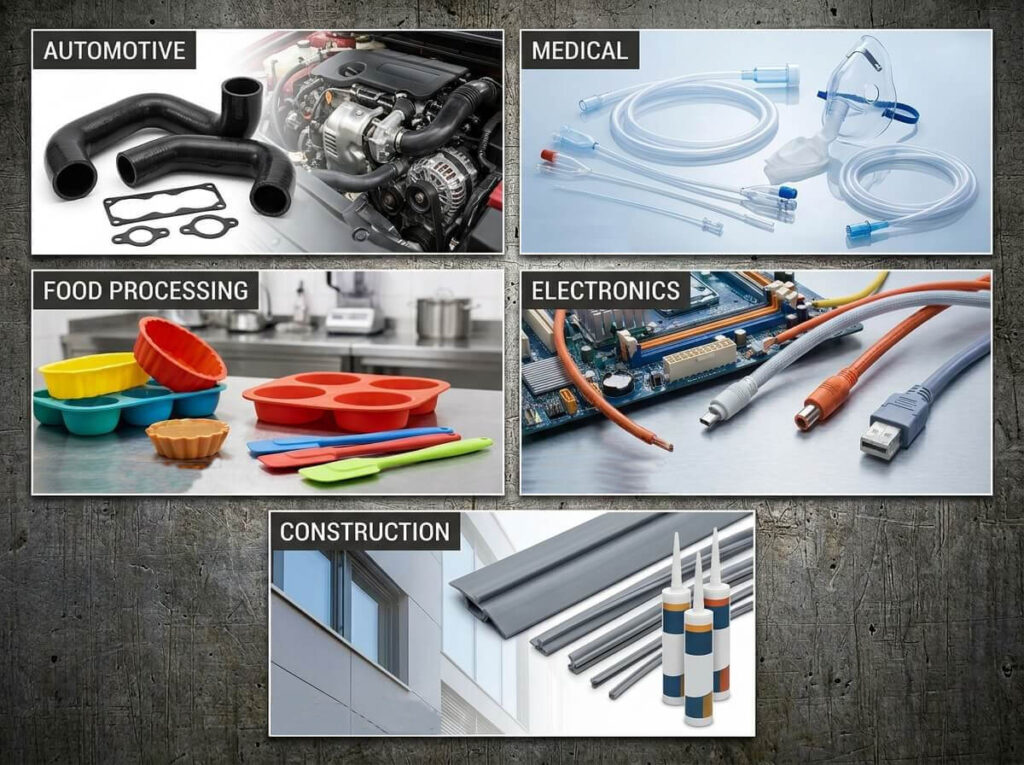
India is one of the fastest-growing markets for silicone rubber globally. The India Liquid Silicone Rubber market is projected to grow at a CAGR of greater than 8% during 2025–2030, according to Mordor Intelligence (mordorintelligence.com, India Liquid Silicon Rubber Market Report, 2025). The broader India silicone market is projected to grow at a 5–7% CAGR through 2030 (Mobility Foresights, India Silicone Market Report, 2025). The following applications are driving this growth.
Automotive
The India automotive silicone market was valued at USD 389.9 million in 2024 and is projected to reach USD 1,289.8 million by 2033, growing at a CAGR of 14.4% (Grand View Research, Horizon Databook, January 2026). Key applications include gaskets and O-rings for engine compartments, turbocharger and radiator hoses, spark plug boots, vibration dampers, connector seals for wiring harnesses, and, increasingly, electric vehicle (EV) battery pack seals and high-voltage connector insulation. The global shift to EVs is accelerating demand for HTV and LSR grades specifically rated for extended thermal cycling.
Healthcare and medical devices
India’s medical device market is predicted to grow at a CAGR of 15%, which is 2.5 times the global growth rate, according to Invest India data cited in the Mordor Intelligence India LSR report. Medical-grade silicone rubber is used in tubing for IV delivery systems, catheters, syringe stoppers, respiratory masks, wearable health monitoring devices, and surgical tools. Both USP Class VI and ISO 10993 compliance are required for these applications. LSR is the preferred type due to its high purity, low extractables, and resistance to steam sterilisation, ethylene oxide, and gamma radiation.
Food and beverage processing
India’s food processing industry is a major consumer of FDA-compliant food-grade silicone. Applications include gaskets and seals for food processing machinery, tubing for liquid transfer, baking moulds, O-rings in beverage dispensing equipment, and dairy line connections. Food-grade silicone rubber must comply with 21 CFR 177.2600 of the FDA, confirming that it will not transfer harmful substances to food under normal use conditions (ElastaPro, 2026). It is also odourless and tasteless, making it ideal for beverage contact.
Electrical and electronics
Silicone rubber’s excellent dielectric properties (breakdown voltage of 2 × 10⁷ V/m, conductivity ≈10⁻¹⁴ S/m) make it indispensable for cable insulation, transformer seals, LED lens encapsulants, and keypads. India’s growing electronics manufacturing sector, driven in part by the PLI (Production Linked Incentive) scheme, is a key driver of LSR demand, with electronics manufacturing businesses expected to produce equipment valued at more than USD 21.62 billion under the PLI plan for IT hardware (Mordor Intelligence, India LSR Market Report, 2025).
Construction
Structural silicone has been used for glazed curtain wall façades since 1974. In India, silicone rubber sealants and gaskets are used in commercial building glazing systems, bathroom and kitchen seals, and fire-resistant door and window gaskets. Its extreme UV resistance and ability to maintain its waterproof performance for decades make it preferred over other elastomers for outdoor façade applications (Wikipedia, “Silicone”, citing 1974 Art Institute of Chicago application).
Frequently Asked Questions
What is silicone rubber made of?
Silicone rubber is made from polydimethylsiloxane (PDMS), a synthetic polymer with a backbone of alternating silicon and oxygen atoms (Si–O–Si), with methyl side groups attached to each silicon centre. In its commercial form, it also contains reinforcing fillers (primarily fumed silica), curing agents, and functional additives. Its chemical elements are silicon, oxygen, carbon, and hydrogen (Wikipedia, Silicone).
What temperature can silicone rubber withstand?
Standard silicone rubber grades operate continuously from −55°C to approximately 200–230°C. High-temperature specialty grades can withstand up to 300°C for short-term exposures. Wacker’s ELASTOSIL® R 756/40 OH demonstrates 300°C capability with the addition of a heat stabiliser.
Is silicone rubber the same as natural rubber?
No. Natural rubber is a biopolymer derived from the latex of rubber trees (Hevea brasiliensis) with a carbon-to-carbon polymer backbone. Silicone rubber is a synthetic material with an inorganic silicon–oxygen backbone. The carbon backbone of natural rubber makes it susceptible to UV, ozone, and high-temperature degradation, whereas silicone rubber is less susceptible. Natural rubber has higher tensile strength; silicone has far superior heat and chemical resistance.
What is the difference between HTV and LSR silicone rubber?
HTV has a molecular weight of 400,000–800,000 g/mol and is a solid compound processed by compression, transfer, or extrusion moulding at 160–180°C. LSR has a molecular weight of 10,000–80,000 g/mol, is a liquid at room temperature, and is processed by liquid injection moulding at 120–200°C in 20–60 second cycles. LSR is preferred for high-precision, high-volume production and medical/food applications; HTV is preferred for mechanically demanding parts and extrusions (Yaksil, December 2025).
Is silicone rubber food safe?
Yes, when the correct grade is specified. Food-grade silicone rubber complies with 21 CFR 177.2600 of the FDA, which permits its use in rubber articles that come into repeated contact with food. The material must be free from toxic or migratory substances under food-contact conditions. Platinum-cured grades are preferred because they produce no volatile by-products during curing (ElastaPro, 2026).
What are the disadvantages of silicone rubber?
Compared to other elastomers, silicone rubber has: (1) lower tensile and tear strength than EPDM or neoprene; (2) the poorest abrasion resistance of common elastomers, making it unsuitable for high-friction applications; (3) poor resistance to hydrocarbon fuels and oils, for which NBR or fluorosilicone is required; and (4) a higher purchase cost than most other rubber materials (Elastoproxy.com; Xometry).
Can silicone rubber be used for electrical insulation?
Yes. Silicone rubber is one of the primary materials used for high-voltage electrical insulation. Its breakdown voltage of 2 × 10⁷ V/m and electrical conductivity of approximately 10⁻¹⁴ S/m make it suitable for cable jacketing, transformer seals, and electrical connectors across a wide temperature range (Li et al., Advanced Science, 2023).
Where can manufacturers in India source silicone rubber?
Major global producers — Wacker Chemie, Shin-Etsu, Momentive, Elkem, and Dow — supply HTV and LSR grades through authorised distributors active in India’s major industrial hubs, including Mumbai, Pune, Ahmedabad, Aurangabad, Bengaluru, and Vapi. Gaurav Impex is an authorised supplier of silicone rubber grades across India, offering technical guidance, Certificates of Analysis, and competitive bulk pricing.
Conclusion
Silicone rubber is a uniquely versatile material, and selecting the right type and grade for your application depends on understanding a few key factors: the temperature range the component will face, whether food or medical compliance is required, the mechanical stresses involved, and your production volume and method.
As a framework: use HTV when mechanical strength and long-term thermal stability are the priority; choose LSR when precision, high-volume production, and food/medical purity are needed; specify RTV when you need sealing, potting, or mould-making at room temperature. In all cases, avoid silicone where hydrocarbon oil resistance or high abrasion is the dominant requirement.
India’s silicone rubber market is growing rapidly across automotive, healthcare, food processing, and electronics — driven by government programmes such as Make in India and PLI schemes. Sourcing certified material through a specialist distributor who can provide technical documentation and a consistent supply is an important step in protecting your product quality and regulatory compliance.
Sources cited in this article
1. Wikipedia. Silicone. https://en.wikipedia.org/wiki/Silicone (April 2026).
2. Wikipedia. Polydimethylsiloxane. https://en.wikipedia.org/wiki/Polydimethylsiloxane.
3. Wikipedia. Silicone rubber. https://en.wikipedia.org/wiki/Silicone_rubber.
4. Li et al. Functional PDMS Elastomers: Bulk Composites, Surface Engineering, and Precision Fabrication. Advanced Science, 2023. PMC ID: PMC10700310. DOI: 10.1002/advs.202304506.
5. Yaksil. HTV, LSR, and RTV Silicone Rubber: Key Differences in Properties, Processing, and Applications. yaksil.com, December 2025.
6. Elkem. What is High Consistency Rubber (HCR) silicone? elkem.com.
7. Wacker Chemie AG. Solid and Liquid Silicone Rubber (ELASTOSIL®) — Technical Guide. Document 6709-EN. wacker.com.
8. Wacker Chemie AG. ELASTOSIL® R 756/40 OH product datasheet. wacker.com.
9. SILITECH AG. Silicone Rubber Guide 2026 — Types, Applications & Market. silitech.ch, April 2026.
10. IOTA Corporation. How many times can the strength of silicone rubber be increased by adding reinforcing fillers? iotachem.com, July 2025.
11. Macromolecules (ACS). Understanding the Reinforcement Effect of Fumed Silica on Silicone Rubber. pubs.acs.org/doi/10.1021/acs.macromol.2c01969.
12. ElastaPro. FDA Title 21 CFR 177.2600 Silicones. elastapro.com, March 2026.
13. Elastostar. FDA Approved Silicone Rubber Profiles & FDA 21 CFR 177.2600 Guide. elastostar.com, 2025.
14. Elastoproxy. Comparing Rubber Compounds: Material Properties. elastoproxy.com.
15. Silicone Engineering UK. EPDM vs Silicone Rubber. silicone.co.uk, 2018.
16. Essentra Components. EPDM vs Silicone: A Simple Guide. essentracomponents.com, 2024.
17. Xometry. Silicone vs EPDM: Material Differences and Comparisons. xometry.com, 2025.
18. Mordor Intelligence. India Liquid Silicon Rubber Market Report 2025–2030. mordorintelligence.com, 2025.