
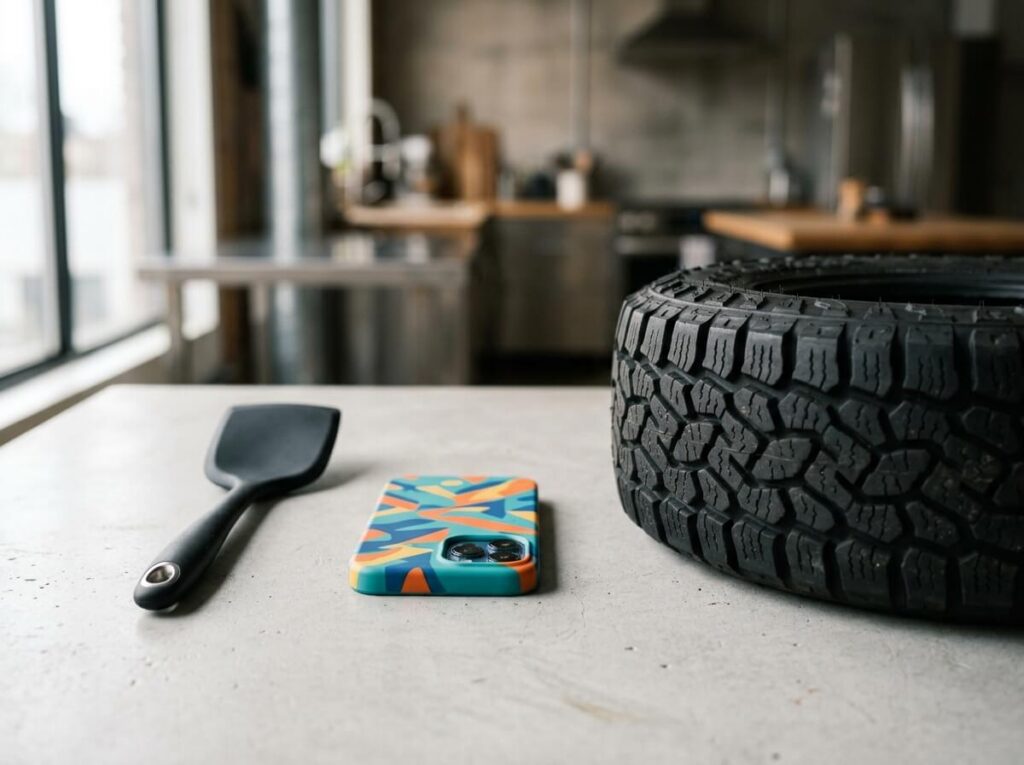
Pick up a spatula, a phone case, and a car tyre, and there’s a good chance at least two of them will feel surprisingly similar in your hand. Squishy, stretchy, a little rubbery. But only one of them is actually rubber. The other two? Silicone. And while the two materials get lumped together constantly, in product descriptions, in casual conversation, even on some store shelves, they’re built differently, they behave differently, and they’re absolutely not interchangeable for every job.
Here’s the short version: rubber is a hydrocarbon-based material, prized for stretch and toughness, but it doesn’t love heat, sunlight, or chemicals. Silicone is built around a silicon-oxygen backbone, and it shrugs off high temperatures, UV rays, and chemical exposure that would wreck ordinary rubber, at a slightly higher price. This guide breaks down exactly where those differences matter, so you’re not guessing next time you’re choosing a material for the kitchen, the garage, or a DIY project.
Quick Summary — Rubber vs Silicone at a Glance
If you only remember one thing from this article, make it this: rubber is the flexible workhorse, silicone is the heat-and-weather-proof specialist.
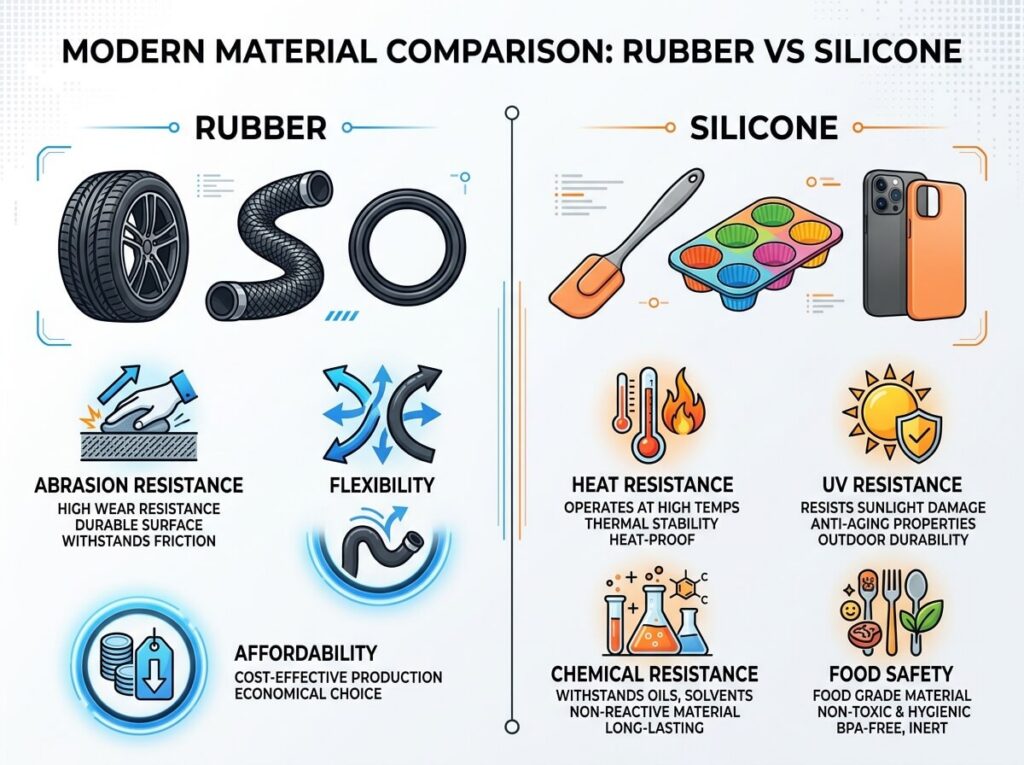
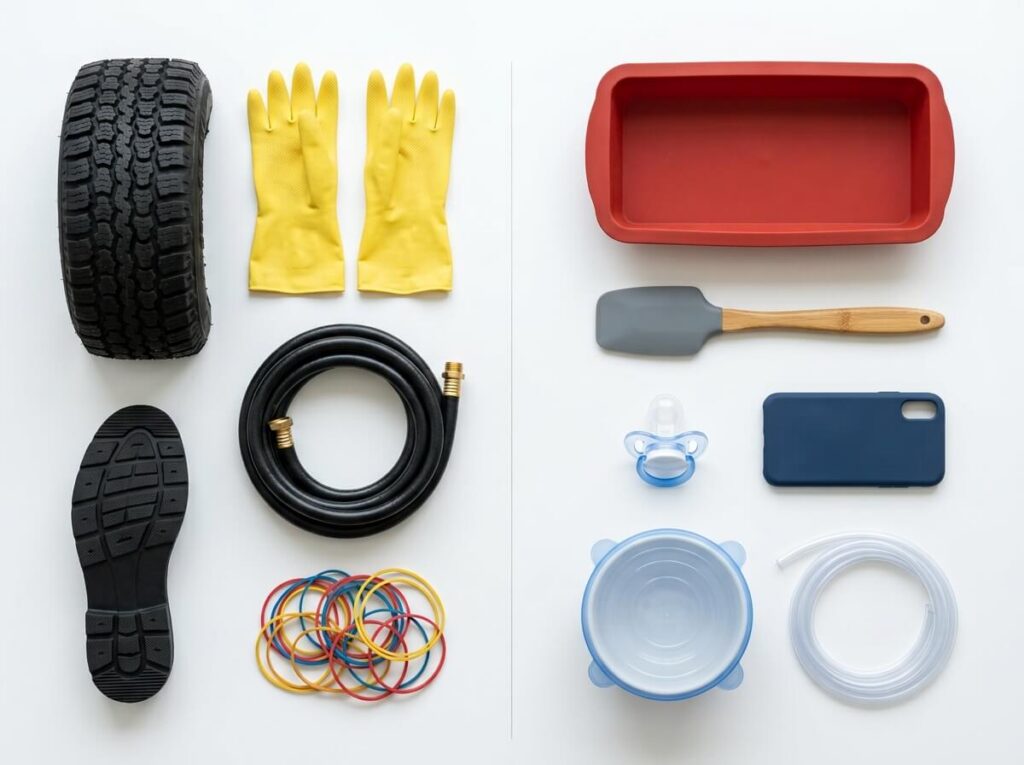
- Rubber stretches, bounces back, and resists wear beautifully- think tyres, hoses, and rubber bands. It’s cheaper, but it ages faster in the sun and heat, and can break down when it touches oils or certain chemicals.
- Silicone handles extreme heat and cold, resists UV and weathering for years, and is considered safe enough for food, baby products, and medical devices. It costs a bit more upfront, but it tends to outlast rubber by a wide margin.
If you’re staring at two products wondering which one to grab, ask yourself: does this need to survive heat, sun, or repeated cleaning? If yes, silicone usually wins. If it just needs to stretch, grip, and absorb shock cheaply, rubber still does the job.
What Is Rubber, Really?
Rubber comes in two flavours: natural rubber, tapped straight from rubber trees, and synthetic rubber, cooked up in a lab from petroleum-based ingredients (you’ll see these called things like SBR or NBR on spec sheets, but you don’t need to memorise that).
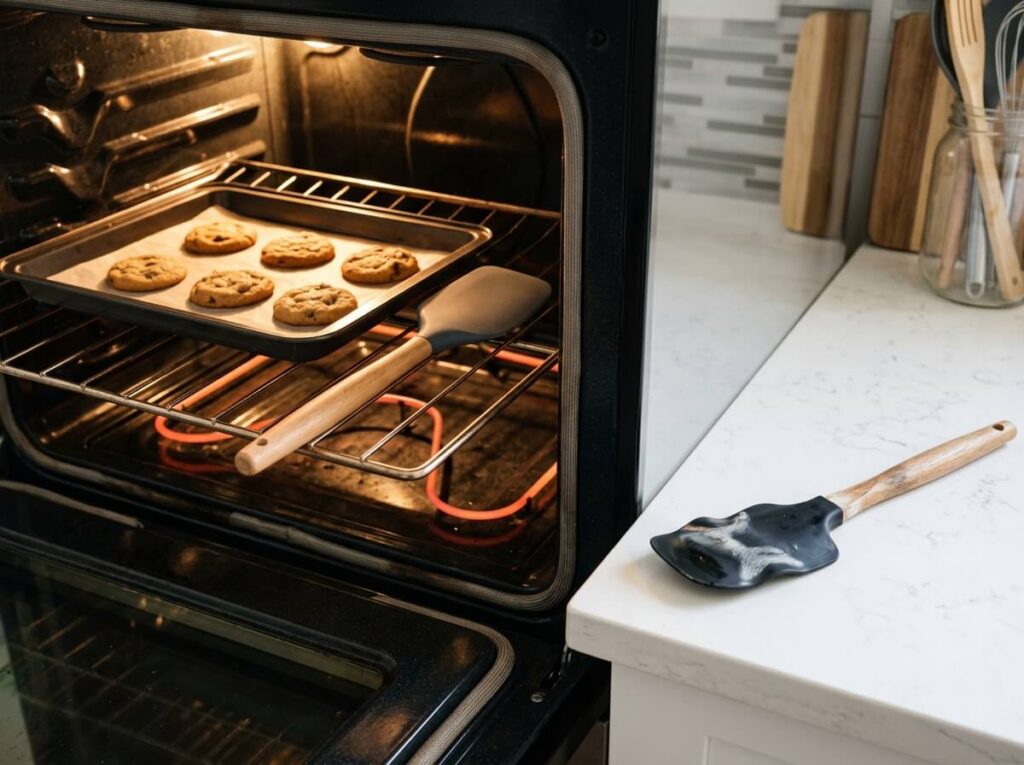
What makes rubber so useful is its elasticity — stretch it and it snaps right back, combined with genuinely impressive resistance to abrasion. That’s exactly why it ends up in tyres, conveyor belts, hoses, shoe soles, and basic seals and gaskets. The catch is that rubber is more vulnerable to sunlight, ozone, and temperature swings. Left outside for a few summers, a rubber seal or hose will visibly crack, harden, or perish faster than you’d expect.
What Is Silicone, Really?
Silicone isn’t a hydrocarbon at all, its backbone is made of silicon and oxygen atoms, which is part of why it behaves so differently from rubber. That structure is unusually stable, which is the whole reason silicone can handle both blazing oven heat and freezer-level cold without falling apart.
It’s also chemically inert in most everyday situations, doesn’t react much with oils or cleaning products, and holds up to UV exposure for years without going brittle. That combination is why silicone shows up everywhere from baking mats and ice cube trays to phone cases, medical tubing, and outdoor weatherstripping.
Curious how silicone actually gets classified? We’ve covered that in more depth here: Is Silicone a Rubber or Plastic?
Rubber vs Silicone: Side-by-Side Comparison
| Property | Rubber | Silicone |
|---|---|---|
| Made from | Natural or synthetic hydrocarbons | Silicon and oxygen (polysiloxane) |
| Handles heat | Softens or degrades at higher temperatures | Stays stable across a much wider range, including oven-level heat |
| Handles cold | Can stiffen and crack in extreme cold | Stays flexible even at low temperatures |
| Sun & weather resistance | Cracks and hardens faster with UV/ozone exposure | Resists UV and weathering for years |
| Chemical resistance | Can degrade with oils and certain solvents | Holds up well against most household chemicals and cleaners |
| Stretch & wear resistance | Excellent — built for repeated flexing and friction | Good, but not usually as tough under constant mechanical wear |
| Food & medical safety | Needs added stabilisers; not always food-grade | Widely used in food-grade and medical-grade products |
| Cost vs lifespan | Cheaper upfront, shorter lifespan | Costs more upfront, but often lasts significantly longer |
| Common uses | Tyres, hoses, belts, general-purpose seals | Bakeware, food storage, baby products, outdoor seals, electronics |
Which One Should You Actually Use?
In the Kitchen and Around Food
This is where silicone earns its reputation. Silicone bakeware handles oven heat without melting or leaching anything into your food, silicone spatulas won’t scratch non-stick pans, and silicone food storage lids won’t warp in the dishwasher. It’s odourless, doesn’t hold onto smells the way some rubbers can, and is the material of choice for baby bottle nipples, pacifiers, and teething toys precisely because it’s considered safe for repeated contact with skin and food.
If you want the full picture on why manufacturers reach for silicone in sensitive applications, this goes deeper: What Is Silicone Rubber?
Outdoors and Around the House
Weatherstripping, window and door seals, outdoor gaskets — anything that’s going to bake in the sun for years is a job for silicone. Rubber seals in the same spot will often visibly crack and harden within a couple of summers, while silicone barely notices the UV exposure. If you’re re-sealing a window or fixing a leaky outdoor fixture and want it to actually last, silicone is worth the extra cost.
DIY Projects and Crafts
Here’s where rubber can still hold its own. Rubber bands, rubber grips, rubber flooring mats, and anything that needs cheap, tough, everyday stretch is still very much rubber’s territory. Silicone does show up in DIY too — mainly in mould-making, where liquid silicone rubber is poured to create flexible moulds for resin, candles, or soap — but for basic grip-and-stretch tasks, ordinary rubber remains the practical, budget-friendly pick.
Baby Products and Anything That Touches Skin
Given how often silicone products end up in a baby’s mouth or against sensitive skin, safety understandably comes up a lot. Medical-grade and food-grade silicone is manufactured to be non-toxic and free of the additives some rubbers rely on for flexibility, which is exactly why it dominates this category — from teethers to nursing accessories to wearable health devices.
Safety and the Environment
One thing that surprises people: not all rubber is created equal when it comes to additives. Some rubber formulations use plasticisers and stabilisers to stay flexible, and depending on the specific compound, that can raise questions around off-gassing or chemical exposure over time — particularly relevant for anything that touches food or skin.
Silicone, by contrast, is generally odourless and doesn’t rely on the same kind of additive package, which is part of why it’s the default choice for food-grade and medical-grade products. On the environmental side, neither material breaks down quickly in landfills, but silicone’s durability actually works in its favour here — a silicone product that lasts four times longer than its rubber equivalent means four times fewer replacements ending up in the bin.
FAQs
Is silicone safer than rubber?
For food contact and skin contact, silicone is generally considered the safer default, mainly because food-grade and medical-grade silicone is manufactured without the additives some rubber compounds use. That said, quality and certification matter more than the material label alone — always check for food-grade or medical-grade certification regardless of which material you’re buying.
Can silicone replace rubber in every application?
Not really, and it’s not really about “better” — it’s about the job. Silicone doesn’t win on raw abrasion resistance or cost the way rubber does, so for high-wear, budget-driven uses like tyres or industrial belts, rubber is still the practical choice.
Is silicone environmentally friendly?
It’s not biodegradable, but it doesn’t break down into microplastics the way some materials do, and its long lifespan means less frequent replacement. Some specialty recyclers do accept silicone, though it’s less widely recycled than more common plastics.
Does silicone rubber smell?
Good-quality, properly cured silicone is essentially odourless. A noticeable chemical smell usually points to lower-quality material or incomplete curing — worth avoiding, especially in kitchen or baby products.
What’s the difference between silicone and silicone rubber?
They’re closely related — “silicone rubber” is essentially silicone formulated and cured to behave like a rubber, combining silicone’s heat and chemical resistance with rubber-like stretch and flexibility. For a full breakdown, see What Is Liquid Silicone Rubber?
Conclusion: How to Choose the Right Material
Boiled down to a checklist, here’s what actually decides the winner:
- Heat or cold exposure? → Silicone
- Constant sun or outdoor weathering? → Silicone
- Touching food, skin, or a baby’s mouth? → Silicone (certified food/medical-grade)
- High mechanical wear, tight budget, general-purpose stretch? → Rubber
- One-off DIY project where cost matters more than lifespan? → Rubber
Neither material is objectively “better” — they’re built for different jobs, and the right choice comes down to what your product actually has to survive. If this comparison raised the bigger question of what silicone even is at a chemical level, it’s worth reading next: Is Silicone a Rubber or Plastic?