
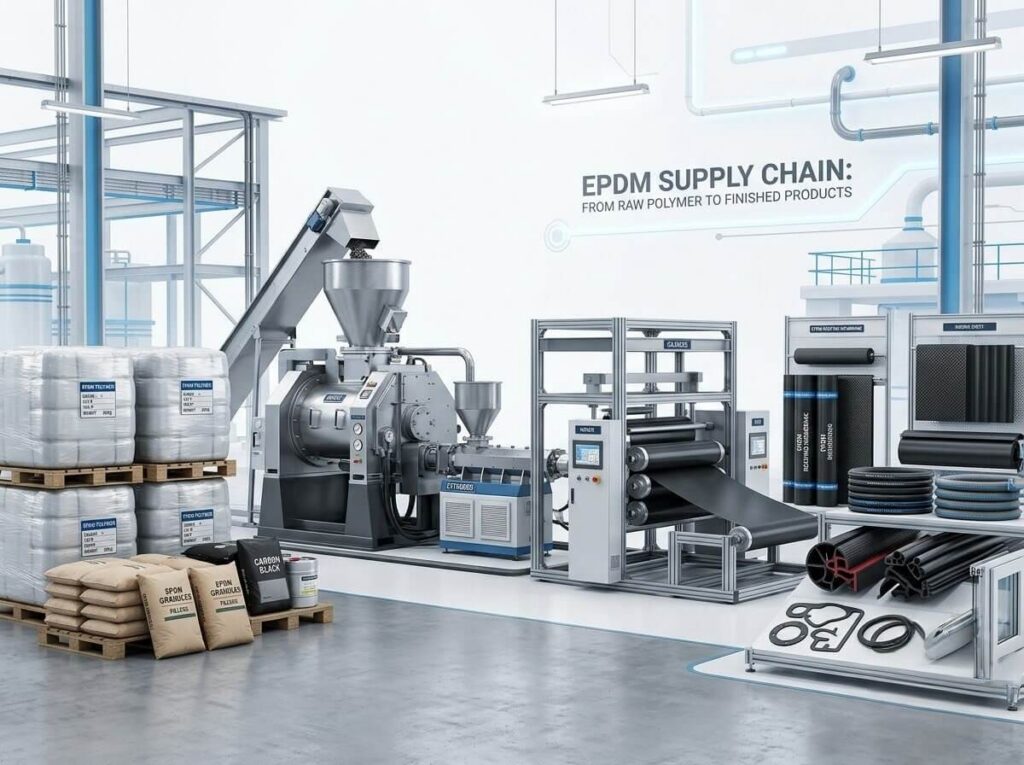
If you’ve searched “what is EPDM rubber sheet,” you’ve probably landed on pages selling pre-cut rubber sheets, rolls, or gaskets. That’s one part of the EPDM story — but it’s the last step in a much longer supply chain. Before EPDM ever becomes a sheet, gasket, or roofing membrane, it starts life as a raw synthetic polymer.
This distinction matters if you’re a manufacturer, processor, or procurement professional trying to source EPDM for production — because “buying EPDM” means something very different depending on where you sit in that chain.
EPDM Rubber, Defined
EPDM stands for Ethylene Propylene Diene Monomer, a synthetic rubber made by polymerizing ethylene and propylene with a small amount of diene monomer to allow for sulfur curing. It’s one of the most widely used synthetic elastomers in the world, prized for:
- Weather and ozone resistance — performs reliably in outdoor conditions where natural rubber degrades
- Wide temperature tolerance — typically stable from around -40°C to +130°C depending on compound
- Chemical resistance — strong resistance to polar substances like water, steam, and alkalis (though not to oils and hydrocarbons)
- Electrical insulation properties — useful in cable and electrical component manufacturing
These properties are why EPDM shows up in automotive seals, roofing membranes, window and door gaskets, hoses, and industrial gaskets across nearly every manufacturing sector.
What is EPDM Rubber Made Of?
EPDM is made by polymerizing three main building blocks: ethylene, propylene, and a small amount of a diene monomer (commonly ENB, ethylidene norbornene). The ethylene and propylene form the backbone of the polymer, while the diene provides a side chain that allows the rubber to be cross-linked, or “cured,” with sulfur during processing. This is what turns the raw, unprocessed polymer into a durable, flexible finished rubber product. The exact ratio of these components — along with additives like carbon black, oils, and curing agents introduced during compounding — determines the hardness, flexibility, and performance of the final EPDM compound.
What is EPDM Rubber Used For?
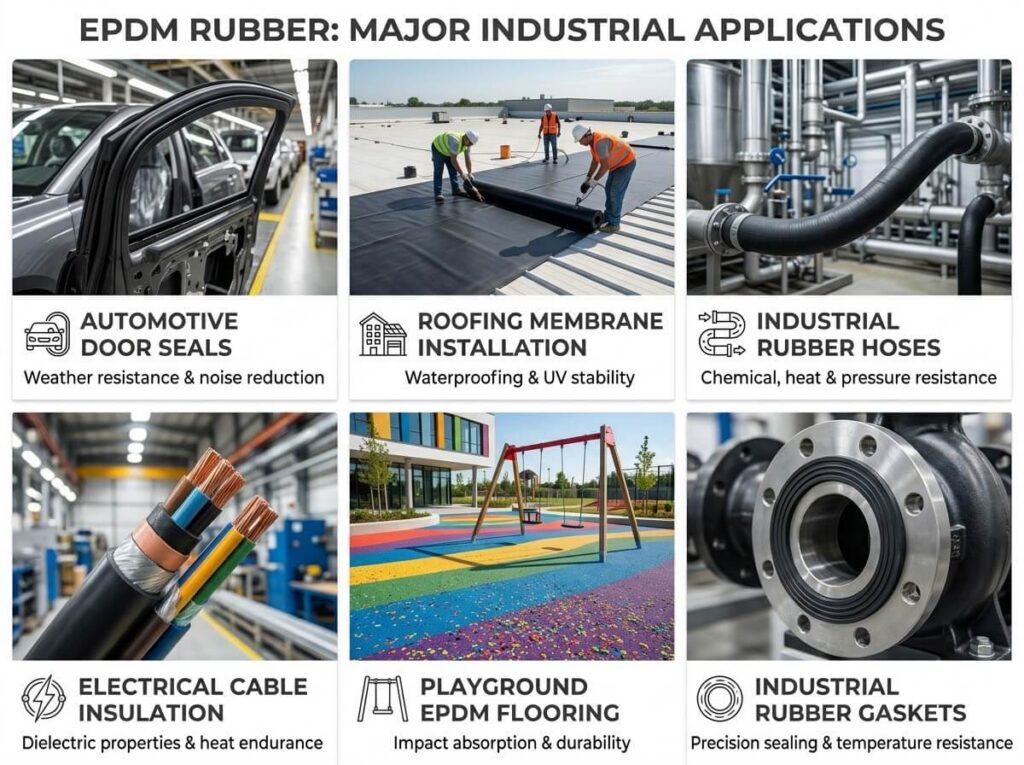
Because of its weather, ozone, and temperature resistance, EPDM raw polymer is compounded into finished products across a wide range of industries:
- Automotive — door and window seals, hoses, weatherstripping, vibration-dampening components
- Construction and roofing — waterproofing membranes, roofing sheets, window and cladding gaskets
- Flooring — EPDM granules are compounded into rubber flooring for playgrounds, gyms, and sports surfaces
- Electrical — cable insulation and electrical component sealing
- General industrial — gaskets, hoses, seals, and molded rubber parts exposed to outdoor or variable-temperature conditions
Each of these end uses starts the same way: a manufacturer buys raw EPDM polymer and compounds it for that specific application.
What is EPDM Rubber Hose?
EPDM rubber hose is a finished hose product made by extruding compounded EPDM polymer, commonly used for coolant lines, water hoses, and general industrial fluid transfer where heat and weather resistance matter. The raw EPDM polymer used in hose manufacturing is typically a different grade than what’s used in sheet or flooring applications, selected for extrusion performance and flexibility.
What is EPDM Rubber Flooring?
EPDM rubber flooring is made from EPDM granules — small pieces of cured EPDM rubber — bonded together with a polyurethane binder to create a soft, durable surface. It’s widely used for playgrounds, running tracks, and gym flooring because of its shock absorption and UV stability. This is a different downstream product from EPDM sheet or hose, but it starts from the same family of raw EPDM polymer.
What is EPDM Rubber Roofing?
EPDM rubber roofing is a single-ply membrane made from compounded EPDM rubber, used as a waterproofing layer on flat and low-slope roofs. It’s valued in roofing applications specifically for its resistance to UV exposure and ozone over decades of outdoor use — the same base properties that make raw EPDM polymer useful across so many other industries.
Raw EPDM Polymer vs. Finished EPDM Sheet: What’s the Difference?
This is the part most “what is EPDM” articles skip — and it’s the most important one if you’re buying for production rather than for a DIY or repair project.
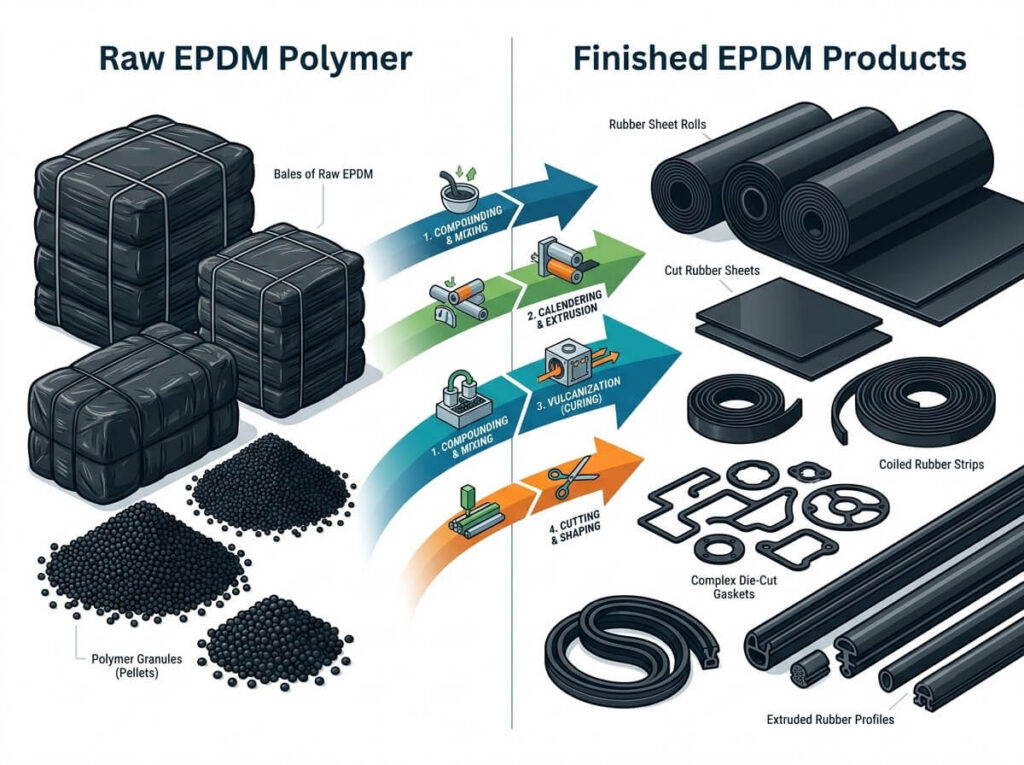
Raw EPDM polymer is the base synthetic rubber in its unprocessed form — typically supplied as bales or granules. It hasn’t been compounded, cured, or shaped yet. Manufacturers buy raw EPDM polymer and combine it with fillers, curing agents, and additives to create a compound suited to their specific application, which they then mold, extrude, or calendar into a finished product.
Finished EPDM sheet (or rolls, strips, gaskets, and profiles) is the end product of that compounding and processing work — ready to cut, install, or use directly. This is what you’ll find at rubber-sheet retailers, sold by thickness, width, and durometer.
In short: raw EPDM polymer is the ingredient. EPDM sheet is the finished dish. If you’re a rubber compounder, gasket manufacturer, roofing membrane producer, or auto parts maker, you need the ingredient — not the finished sheet — because you’re doing the compounding and processing in-house.
| Raw EPDM Polymer | Finished EPDM Sheet | |
|---|---|---|
| Form | Bales or granules | Cut sheet, rolls, strips, gaskets |
| Processing stage | Unprocessed base material | Compounded, cured, shaped |
| Typical buyer | Rubber compounders, manufacturers | Fabricators, installers, end users |
| Sold by | Weight (kg/tonne) | Thickness, width, durometer |
| Customization | Buyer controls the compound formulation | Fixed by the manufacturer |
| Where to buy | Authorized polymer importers/distributors | Rubber sheet retailers/suppliers |
Where Raw EPDM Polymer Comes From
Raw EPDM polymer is produced by a small number of global manufacturers under established brand names, including:
- Keltan (Arlanxeo)
- Nordel (Dow)
- Vistalon (ExxonMobil)
Each brand offers multiple grades varying in ethylene content, diene type, and Mooney viscosity — differences that affect cure speed, mechanical properties, and processing behavior. Selecting the right grade depends on your end application, whether that’s automotive sealing, roofing membrane, or general industrial rubber goods.
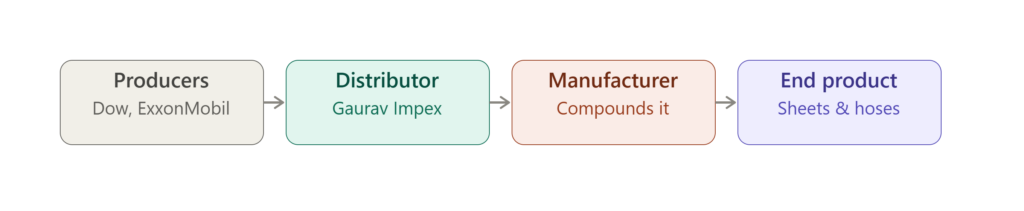
Because these polymers are manufactured by a handful of global producers, most manufacturers in India source them through authorized importers and distributors rather than buying directly from the plants — which is where reliable documentation, batch consistency, and technical support become critical selection criteria.
Why This Distinction Matters for Sourcing
If you’re compounding and processing rubber yourself, buying finished EPDM sheet doesn’t help you — you need the raw polymer as your production input. Getting this wrong at the sourcing stage typically means:
- Paying finished-goods pricing for what should be a raw material input
- Losing control over the compound formulation your process actually needs
- Dealing with suppliers who aren’t set up for bulk, recurring B2B supply
For manufacturers who process EPDM in-house, sourcing raw polymer directly from an authorized distributor — with proper technical datasheets and MSDS documentation — is the more reliable and cost-effective path.
Sourcing Raw EPDM Polymer in India
Gaurav Impex supplies raw EPDM polymer — including Keltan, Nordel, and Vistalon grades — to manufacturers across India through an authorized, B2B-focused import and distribution model. If your production process starts with raw polymer rather than finished sheet, our EPDM supplier in India page covers available brands, typical applications, and how to request pricing for your required grade and quantity.
Frequently Asked Questions
Is an EPDM rubber sheet the same as raw EPDM rubber? No. Raw EPDM rubber (or EPDM polymer) is the unprocessed base material. EPDM sheet is a finished, compounded product made by processing raw EPDM polymer with fillers, curing agents, and additives.
Can I buy raw EPDM polymer directly from manufacturers like Dow or ExxonMobil? Global producers typically supply through authorized distributors and importers rather than direct retail sale, especially for regional B2B markets like India.
What industries use raw EPDM polymer? Automotive components, roofing and waterproofing membranes, seals and gaskets, electrical insulation, and general industrial rubber compounding.
What is EPDM rubber made of? EPDM is made from ethylene, propylene, and a small amount of diene monomer, polymerized together and then cured with sulfur during processing to form the final rubber compound.
How do I choose between Keltan, Nordel, and Vistalon? Grade selection depends on your end application, required cure system, and processing method. A supplier with technical support can help match the right grade to your process.