
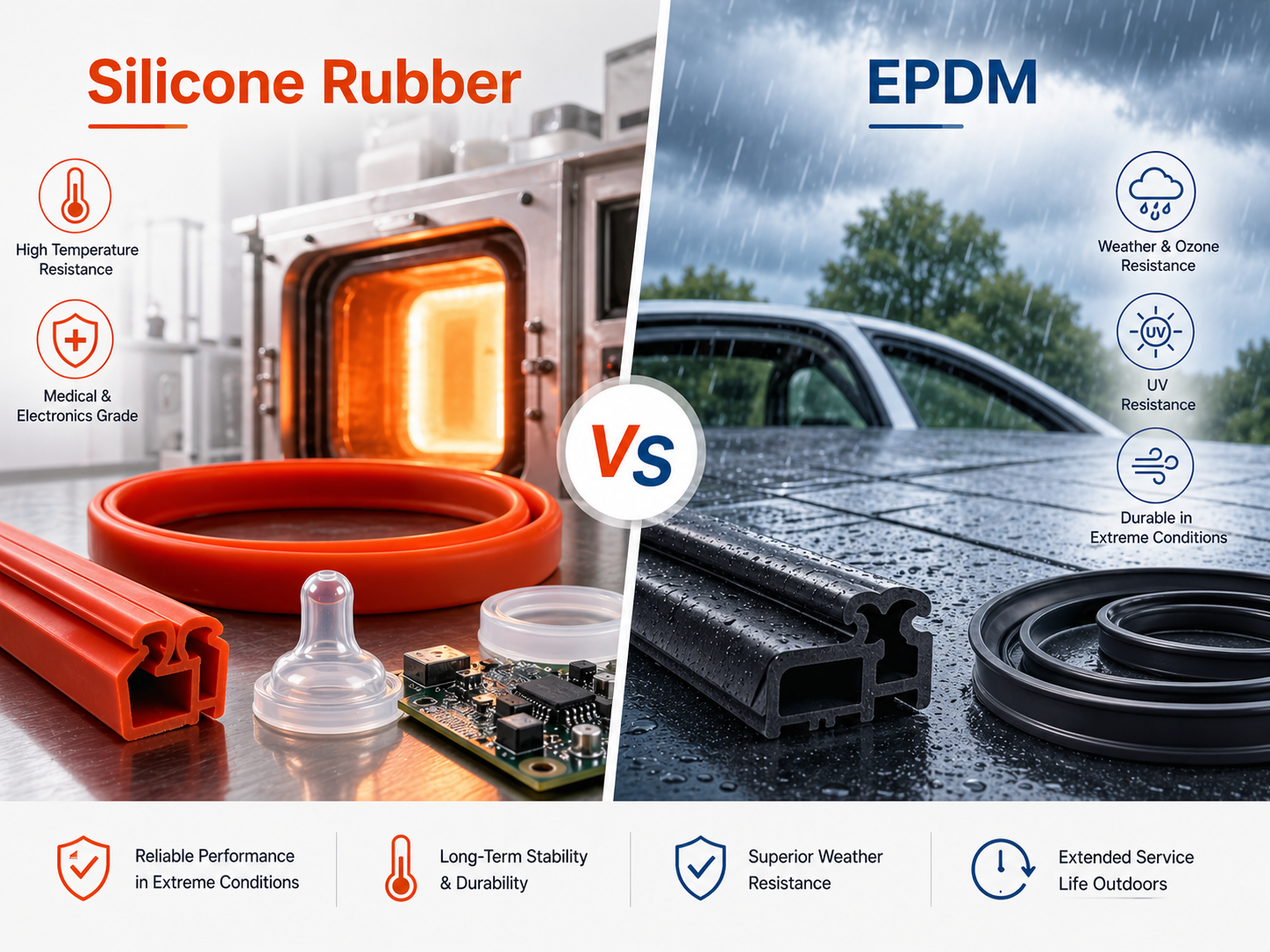
When it comes to sourcing rubber materials, procurement managers are often faced with one recurring dilemma: Silicone Rubber or EPDM? Both are high-performance elastomers trusted across industries — but they are not interchangeable. Choosing the wrong material for your application can lead to premature failure, costly replacements, compliance issues, and unplanned downtime.
This guide is designed to help procurement and purchase managers cut through the confusion. We break down the properties, strengths, limitations, and ideal use cases of both Silicone Rubber and EPDM — so you can make a confident, cost-effective decision every time you raise a purchase order.
What is Silicone Rubber?
Silicone Rubber is a synthetic elastomer composed primarily of silicon, oxygen, carbon, and hydrogen. Unlike organic rubbers, silicone’s molecular backbone is inorganic (Si-O bonds), which gives it exceptional stability across a wide range of temperatures and environments.
Silicone rubber is available in several forms, including sheets, rolls, sponge, cords, extrusions, and molded components. It is widely available in standard, food-grade, and flame-retardant grades depending on the application requirement.
Key Strengths at a Glance:
- Extremely wide operating temperature range: –60°C to +230°C
- Excellent electrical insulation properties
- FDA and food-grade compliant grades available
- Maintains flexibility and elasticity over long periods
- Good resistance to oils, solvents, and many chemicals
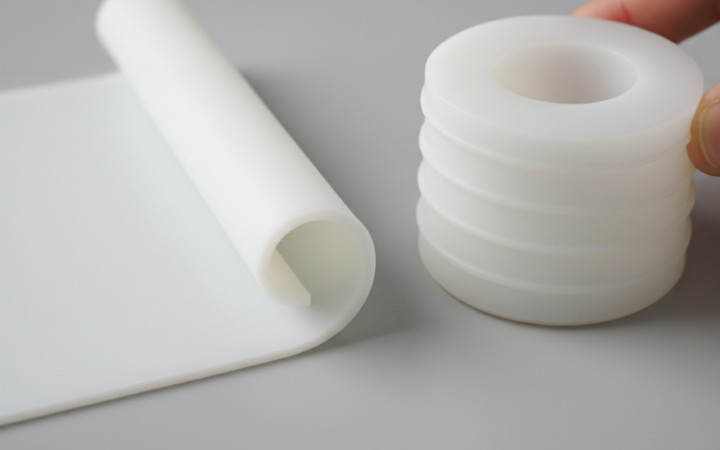
Silicone is commonly sourced by industries such as pharmaceuticals, food processing, electronics, automotive, and aerospace — wherever extreme temperatures or hygiene compliance are non-negotiable.
What is EPDM Rubber?
EPDM (Ethylene Propylene Diene Monomer) is a synthetic rubber known for its outstanding resistance to weathering, ozone, and UV radiation. Its chemical structure — featuring a saturated polymer backbone — makes it one of the best outdoor-facing rubbers available at a cost-effective price point.
EPDM is available in sheets, rolls, gaskets, seals, sponge rubber, and profiles. It can be sourced in standard and flame-retardant grades, with varying hardness and density depending on the application.
Key Strengths at a Glance:
- Outstanding outdoor, UV, and ozone resistance
- Excellent resistance to water, steam, and many dilute acids/bases
- Higher tensile and tear strength compared to silicone
- Good performance in the –40°C to +150°C range
- Cost-effective for large-volume, standard industrial applications
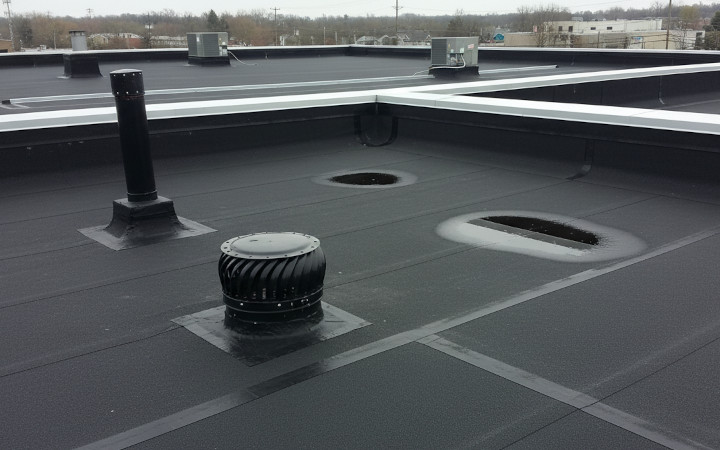
EPDM is widely used in construction, HVAC systems, automotive weatherstripping, roofing membranes, plumbing seals, and water infrastructure — wherever durability against outdoor elements matters most.
Head-to-Head: Key Properties Comparison
The table below gives procurement managers a quick, at-a-glance comparison of both materials across the most critical performance parameters:
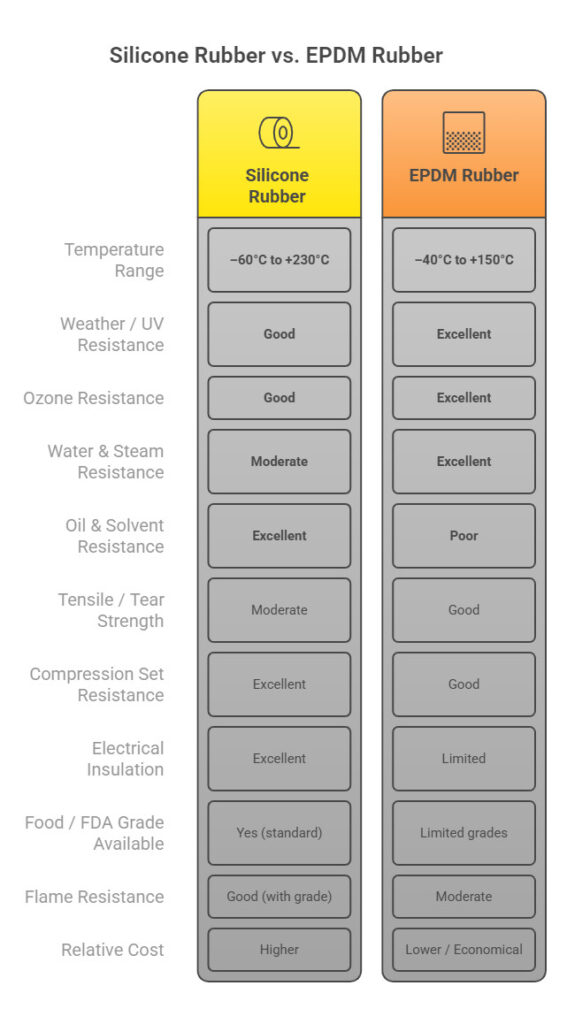
💡 Pro Tip for Procurement: Use this table as a reference checklist when evaluating supplier datasheets. Ensure the grade being quoted matches your specific operating conditions — not just the general material type.
Detailed Property Breakdown
1. Temperature Resistance
This is where Silicone Rubber stands out most clearly. It maintains its mechanical properties from –60°C all the way up to +230°C, and in some specialty grades, even higher. This makes it the go-to material for under-hood automotive components, industrial ovens, aerospace seals, and any environment where extreme heat or cold is a constant variable.
EPDM performs reliably in the –40°C to +150°C range — perfectly adequate for most HVAC, construction, and water system applications — but it loses its edge in environments that regularly exceed 150°C.
💡 If your application involves extreme heat, cryogenic conditions, or wide thermal cycling — Silicone is the safer specification.
2. Weather, UV & Ozone Resistance
EPDM is the undisputed champion for outdoor exposure. Its saturated polymer backbone makes it virtually immune to ozone cracking and UV degradation — a common failure mode in less weather-resistant rubbers. Roofing membranes, outdoor cable management, exterior door and window seals, and garden hose fittings are all classic EPDM applications.
Silicone also performs well outdoors and is naturally resistant to UV, but for long-term outdoor durability at scale, EPDM delivers equivalent or better performance at a lower cost per unit.
💡 For outdoor or exposed infrastructure applications, EPDM typically offers the best value without compromising on longevity.
3. Chemical Resistance
Silicone Rubber has excellent resistance to oils, solvents, many fuels, and a broad range of chemicals — making it suitable for industrial applications involving lubricants, hydraulic fluids, and cleaning agents.
EPDM, on the other hand, performs exceptionally well against water, steam, hot water, dilute acids, and bases — but it has poor resistance to petroleum-based oils, fuels, and many hydrocarbon solvents. Specifying EPDM in an oil-rich environment is a common and costly mistake.
💡 Always verify the chemical compatibility of the rubber grade with the specific media it will contact. Ask your supplier for a chemical resistance chart before finalizing the specification.
4. Mechanical Strength & Tear Resistance
EPDM generally offers better tensile strength and tear resistance compared to standard silicone grades. This is an important consideration for applications involving mechanical stress, clamping, abrasion, or repeated flexing — such as door seals, expansion joints, and compressed gaskets.
Silicone’s mechanical strength, while sufficient for static sealing and cushioning applications, is not its primary selling point. Reinforced silicone grades are available for demanding applications but come at a premium.
5. Flexibility & Compression Set
Silicone Rubber excels in long-term compression set resistance — it bounces back even after prolonged compression, which is critical for seals and gaskets that must maintain a tight fit over years of service. Its flexibility at low temperatures also means it remains pliable and effective in cold environments where other rubbers become brittle.
EPDM has good but comparatively lower compression set resistance. For dynamic sealing applications where material recovery under pressure is critical, silicone is often the preferred specification.
6. Food Grade & Pharmaceutical Compliance
Silicone Rubber is the material of choice for food contact, pharmaceutical processing, and medical device applications. FDA-compliant and food-grade silicone grades are widely available and have excellent track records in hygienic environments. It is non-toxic, odourless, and does not impart taste or colour to food products.
EPDM is available in food-grade grades, but silicone remains the industry standard for these applications due to its superior biocompatibility and broader regulatory compliance credentials.
7. Electrical Insulation
Silicone Rubber is an outstanding electrical insulator and is widely used in cable insulation, connectors, switchgear, and electronic enclosures. Its performance remains stable across temperature extremes — an important property in electrical applications.
EPDM is used in some electrical applications (notably as cable jacket material), but silicone is generally preferred where consistent insulation performance over a wide temperature range is required.
Cost Considerations for Procurement
EPDM is generally more cost-effective than Silicone Rubber — often significantly so for bulk or standard applications. If your requirement fits within EPDM’s performance envelope, specifying silicone simply for its brand reputation or perceived quality represents unnecessary spend.
Silicone Rubber carries a premium price, justified by its superior performance in high-temperature, food-grade, or electrically demanding applications. The key consideration for procurement managers is not just unit price but total cost of ownership — a silicone seal that lasts 10 years in a high-temperature environment delivers far better value than a cheaper alternative that fails in 2.
💡 Procurement Principle: Match the material to the application — not the budget alone. Over-specifying wastes money. Under-specifying causes failures and downtime.
Industry-Wise Quick Selection Guide
Use the reference below to quickly align material selection with your industry:
Automotive
- EPDM: Door seals, window seals, weatherstripping, coolant hoses
- Silicone: Under-hood components, turbocharger hoses, high-temp gaskets, spark plug boots
Construction & Infrastructure
- EPDM: Roofing membranes, glazing seals, expansion joints, waterproofing
- Silicone: High-rise building sealants, high-temp fire-rated seals
Food Processing & Pharmaceuticals
- Silicone (preferred): Conveyor belts, gaskets, seals, tubing, diaphragms — all food-contact applications
HVAC & Plumbing
- EPDM: Water seals, steam gaskets, pipe insulation, radiator seals
- Silicone: High-temperature ductwork seals, exhaust system components
Electronics & Electrical
- Silicone: Cable insulation, connector seals, enclosure gaskets, transformer pads
Industrial Machinery & General Engineering
- EPDM: General-purpose seals, vibration dampers, outdoor-facing components
- Silicone: Precision seals, thermal management pads, high-cycle components
Key Questions Before You Place Your Order
Before finalising your material specification, run through this quick checklist:
- What is the maximum and minimum operating temperature? → If above 150°C, specify Silicone
- Is the application outdoors or exposed to UV/ozone? → EPDM is likely the better value
- Will the rubber contact oils, fuels, or solvents? → Silicone is the safer choice
- Is food-grade or pharmaceutical compliance required? → Silicone is the standard
- Is water, steam, or dilute acid/base exposure involved? → EPDM performs well here
- Is this a high-volume, standard application with moderate performance needs? → EPDM offers cost efficiency
- Is long-term compression set resistance critical? → Silicone is preferred for dynamic seals
Why Source from Gaurav Impex?
At Gaurav Impex, we stock both Silicone Rubber and EPDM across a comprehensive range of grades, hardnesses, and forms — including sheets, rolls, sponge, cords, profiles, and custom-cut components.
- Consistent quality with reliable batch-to-batch uniformity
- Available in standard, food-grade, and flame-retardant grades
- Bulk order capability with competitive lead times
- Custom dimensions and specifications on request
- Expert technical support to help you choose the right grade for your application
Not sure which material suits your application? Our team is happy to review your technical requirements and recommend the most appropriate grade — saving you time and ensuring you get it right the first time.
Conclusion
Both Silicone Rubber and EPDM are excellent materials — but they each have a distinct performance profile. Silicone Rubber is your go-to for extreme temperatures, food-grade compliance, electrical insulation, and long-term compression resistance. EPDM is your workhorse for outdoor durability, water/steam resistance, and cost-effective performance in standard industrial environments.
The right choice is never about which material is ‘better’ in general — it’s about which one is right for your specific application. Use the comparison table, property breakdown, and decision checklist in this guide as your starting reference, and always consult your supplier when in doubt.
Ready to order? Get in touch with Gaurav Impex for expert guidance, competitive pricing, and fast delivery on Silicone Rubber and EPDM materials.