
Silicone is everywhere around us. It is in the medical tubing used in hospitals, the soft parts of baby bottles, automotive seals, and even in the kitchen tools we use every day. One particular type of silicone that industries rely on heavily is Liquid Silicone Rubber, often called LSR.
If you are new to this material, you might be wondering what exactly it is and why so many industries prefer it.
In simple terms, liquid silicone rubber is a high purity silicone elastomer that starts as a liquid and is then molded and cured into flexible rubber parts. Because of its durability, temperature resistance, and safety for human contact, it is widely used in medical, automotive, and consumer products.
In this guide, we will explore what liquid silicone rubber is, where it is used, its advantages and limitations, and how it differs from traditional silicone materials.
What Is Liquid Silicone Rubber?
Liquid Silicone Rubber is a two component silicone elastomer that is processed in liquid form and cured into flexible rubber using heat.
Unlike traditional rubber materials that start as solid sheets or thick gum like substances, LSR begins as a liquid. Manufacturers pump the two liquid components into a mixing system and then inject the mixture into heated molds. Inside the mold, the material cures and forms durable rubber parts.
This process is known as liquid injection molding, and it allows manufacturers to produce highly precise and consistent components.
The chemistry behind LSR is based on platinum cured polysiloxane, which gives the material several important properties such as high temperature resistance, flexibility, and excellent stability.
Because the process is highly automated, LSR manufacturing is ideal for producing large volumes of identical parts with minimal variation.
Key Properties of Liquid Silicone Rubber
One of the main reasons industries rely on LSR is its impressive set of material properties. These characteristics allow it to perform well even in demanding environments.
Because of these properties, liquid silicone rubber maintains its performance even under stress, heat, and exposure to harsh conditions.
| Property | Description | Why it Matters |
|---|---|---|
| Temperature Resistance | Performs in temperatures from −60°C to 250°C | Suitable for extreme environments |
| Biocompatibility | Safe for skin and medical contact | Ideal for healthcare products |
| Flexibility | Wide hardness range from soft to firm | Useful for seals and flexible components |
| Chemical Resistance | Resistant to oils, chemicals, and moisture | Improves durability |
| Electrical Insulation | Excellent insulating properties | Used in electronics and electrical parts |
What Is Liquid Silicone Rubber Used For?
Liquid silicone rubber is used across many industries because it combines safety, durability, and flexibility.
Let’s explore some of the most common applications.
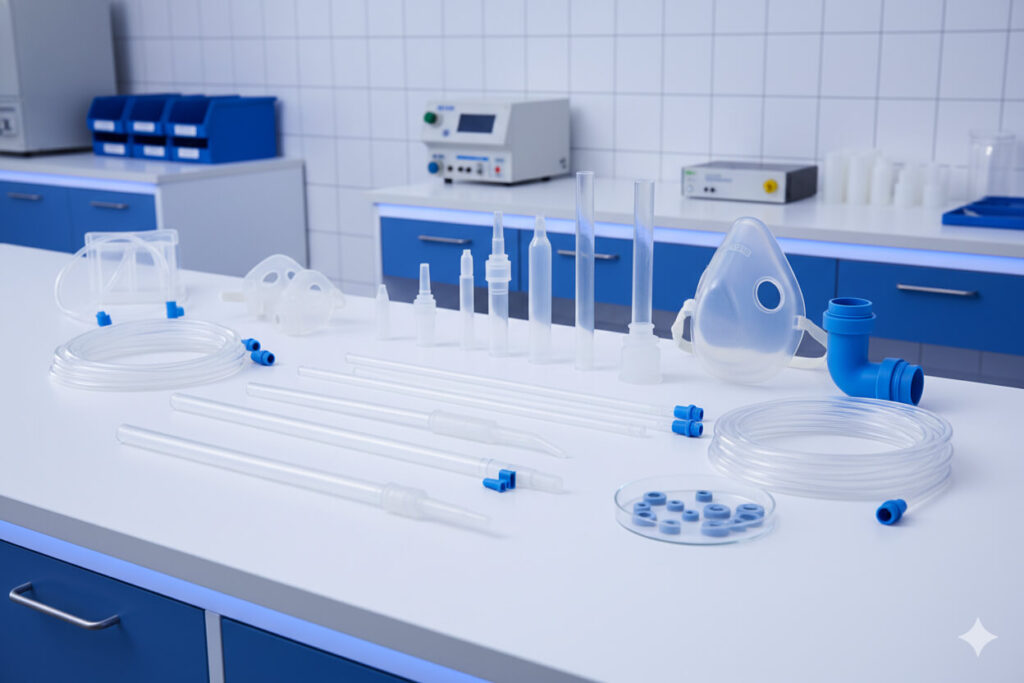
Medical and Healthcare Products
One of the most important uses of LSR is in the medical industry. The material is biocompatible, meaning it can safely come into contact with the human body.
Common medical applications include
- Catheters
- Respiratory masks
- Medical tubing
- Surgical instruments
- Prosthetic components
Because LSR can be sterilized and remains stable at high temperatures, it is widely trusted for healthcare devices.
Consumer and Food Products
Liquid silicone rubber is also widely used in products that come into contact with food or skin.
Examples include
- Baby bottle nipples
- Kitchen utensils
- Baking molds
- Wearable device components
- Bottle seals and lids
Food-grade silicone remains stable even under extreme heat, making it ideal for cooking tools and baking accessories.
Automotive and Industrial Applications
The automotive industry also uses LSR extensively because it can withstand extreme temperatures and harsh environments.
Typical applications include
- Gaskets
- Seals
- Electrical connectors
- Sensor covers
- Vibration dampening components
The ability of silicone rubber to resist heat, chemicals, and aging makes it especially valuable for automotive systems.
Advantages of Liquid Silicone Rubber
Manufacturers often prefer liquid silicone rubber because it offers several advantages over traditional rubber materials.
Some of the key benefits include
- High precision manufacturing
- Fast curing cycles
- Excellent durability
- Resistance to extreme temperatures
- Suitability for medical and food grade products
- Consistent quality in high volume production
Another important advantage is that LSR supports automated manufacturing processes. This allows companies to produce complex components efficiently while maintaining high-quality standards.
For industries that require precision and reliability, liquid silicone rubber provides a dependable material solution.
What Are the Disadvantages of Liquid Silicone Rubber?
Although LSR offers many benefits, it also has some limitations. Understanding these disadvantages helps manufacturers determine whether it is the right material for a specific application.
Higher Tooling Costs
LSR molding requires specialized injection molding equipment and molds. This means the initial investment can be higher compared to some traditional rubber processes.
Complex Manufacturing Setup
Since LSR is processed as a two component liquid system, precise mixing and dosing equipment is necessary. This makes the manufacturing process more technical.
Not Ideal for Small Production Runs
Because of the tooling and equipment costs, LSR is typically more suitable for high volume production rather than small batch manufacturing.
Pigment Stability Challenges
In some environments, certain pigments used in silicone products may experience color fading over time due to UV exposure.
Despite these limitations, the benefits of LSR often outweigh the drawbacks in applications that require durability and precision.
What Is the Difference Between Liquid Silicone and Regular Silicone?
People often assume that liquid silicone and regular silicone are the same, but there are important differences between the two.
Traditional silicone rubber is usually referred to as High Consistency Rubber, or HCR. This material starts as a thick, solid mass and is processed using compression or transfer molding.
Liquid silicone rubber, on the other hand, begins as a liquid and is processed using injection molding.
Here is a simple comparison.
| Property | Description | Why it Matters |
|---|---|---|
| Initial Form | Liquid | Solid or gum like |
| Manufacturing Process | Injection molding | Compression molding |
| Precision | Very high | Moderate |
| Production Speed | Faster | Slower |
| Automation | Highly automated | Often manual |
Why Industries Prefer Liquid Silicone Rubber
Industries across the world continue to adopt liquid silicone rubber because it offers a unique combination of safety, durability, and manufacturing efficiency.
Its ability to withstand extreme temperatures, resist chemicals, and maintain flexibility over long periods makes it suitable for demanding environments.
At the same time, the automated manufacturing process helps companies maintain consistent product quality while producing large volumes efficiently.
For manufacturers looking for a reliable elastomer material, LSR remains one of the most versatile options available today.
Liquid silicone rubber has become an essential material in modern manufacturing. Its ability to combine flexibility, durability, and safety makes it suitable for a wide range of industries.
From medical devices and consumer products to automotive components and industrial seals, LSR offers performance that many traditional materials cannot match.
By understanding its properties, applications, advantages, and limitations, manufacturers can make informed decisions about when and how to use liquid silicone rubber effectively.